By Best Fitness Picks Daily • July 20, 2026 • Contains affiliate links
Affiliate Disclosure: As an Amazon Associate, we earn from qualifying purchases. Clicking our links costs you nothing extra and helps us keep reviewing products for free.
Resistance bands have become the go-to equipment for home fitness because they're affordable, portable, and genuinely effective—but not all bands are created equal. Loop bands, tube bands with handles, and flat therapy bands each excel in different situations, and choosing the wrong type means wasted money and abandoned workouts.
Check the resistance band's thickness and material composition before purchasing, as thicker latex or rubber constructions typically offer better durability and consistent tension over time compared to thinner alternatives that may degrade or snap during intense workouts. Additionally, verify the band's maximum resistance rating matches your current strength level and has enough capacity to accommodate your fitness progression for at least 6-12 months.
This guide compares the actual band types recommended across fitness research, breaks down their specific strengths and limitations, and shows you how to match the right band to your actual use case: whether you're traveling, doing full-body strength work at home, working with limited mobility, or just starting out.
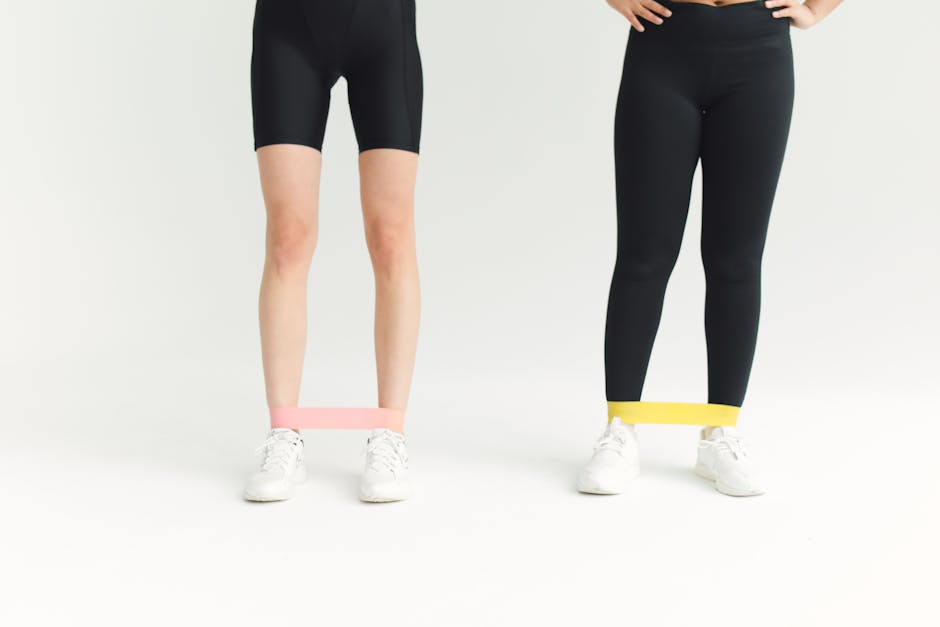
Loop Resistance Bands (Continuous Circles)
Loop bands are solid rubber circles available in multiple resistance levels (typically light 10–20 lbs through heavy 100+ lbs). They come in color-coded sets, making progression straightforward. High-quality options use natural latex or latex-free synthetic rubber with reinforced layers to resist tearing.
Loops excel for lower-body work (squats, glute activation, leg presses) because they stay stable around your legs and don't require hand coordination. They're also effective for upper body when you anchor them or double them for more resistance.
Best for: Beginners and lower-body focused workouts; anyone prioritizing stability and ease of form; full-body home gym building.
Tube Resistance Bands with Handles
Tube bands consist of elastic tubing with ergonomic handles on each end, sometimes with foot anchors included. They're designed to mimic dumbbell movements and allow you to move more freely than loop bands. Available in multiple resistance levels, typically color-coded like loops.
Tubes are particularly effective for chest presses, rows, shoulder work, and exercises where you need controlled handle positioning. The downside: they're slightly bulkier than loops, require more coordination to use correctly, and the handles can slip if your hands are sweaty during intense work.
Best for: Upper-body focused routines; people transitioning from dumbbells; exercises requiring directional pushing/pulling (bench press variants, rows).
Flat Therapy Resistance Bands (Sheet Style)
Therapy bands are long, flat sheets of latex or synthetic rubber, typically 41 inches in length. They're the most compact and affordable option, offering variable resistance throughout the band's length as you stretch it more. No handles or loops—you control the grip and anchor points.
These bands are ideal for rehabilitation, mobility work, and low-impact strength training. They're also the easiest to pack for travel since they're completely flat and weigh virtually nothing. The trade-off: they require more creative problem-solving to anchor and can feel awkward for certain exercises compared to bands with built-in handles.
Best for: Travel fitness; rehabilitation and mobility work; seniors or those with joint sensitivity; minimalist packing; people who prefer DIY anchor setups.
Thicker loop bands with reinforced, multi-layer construction (often marketed as 'heavy-duty') resist snapping and maintain elasticity longer than thin single-layer alternatives. They're specifically engineered for people doing serious strength training who apply maximum tension repeatedly. Serious Steel Fitness is a recommended brand in this category.
The durability advantage justifies the higher cost if you plan to use bands intensively for 1–2+ years. The downside is price: expect to pay 40–80% more than basic alternatives, and the visual difference isn't obvious until failure occurs (or doesn't).
Best for: Strength training enthusiasts planning long-term use; people who've had cheap bands snap mid-workout; anyone wanting peace of mind on durability.
Portable Resistance Band Travel Sets (With Carrying Cases)
Purpose-built travel sets typically include 3–4 loop or tube bands covering a resistance range (light, medium, heavy), bundled with a compact carrying case. They're optimized for airport security, hotel rooms, and vacation schedules. Recent 2026 data shows search volume for these jumped 340% as travelers ditched the gym-during-vacation myth.
These sets solve the 'what do I pack?' problem with everything pre-selected and consolidated. The downside: you're buying a bundle, so you may have resistance levels you don't need, and the case quality varies—cheap cases deteriorate faster than the bands themselves.
Best for: Frequent travelers; people vacationing longer than a week; anyone who values convenience over customization; maintaining fitness momentum while away from home.
Pros & Cons
Pros
✓ Loop bands are stable for lower-body work and require zero coordination learning curve
✓ Therapy bands are the most compact and affordable option for travel and rehabilitation
✓ Tube bands with handles replicate familiar dumbbell movement patterns, reducing form confusion
✓ Multi-layer heavy-duty bands last 2–3+ years without snapping, justifying higher upfront cost
✓ All band types offer variable resistance that increases as you stretch, matching strength throughout the movement range
✓ Color-coded resistance levels make progression tracking and exercise switching straightforward
Cons
✗ Cheap synthetic bands lose elasticity within months or snap unexpectedly during workouts
✗ Tube bands with handles are bulkier to pack than loops or therapy sheets, and handles slip when hands are wet
✗ Flat therapy bands require creative anchoring and feel awkward for certain pushing/pulling exercises compared to handled options
✗ Travel sets force you into predetermined resistance combinations; you may not need all included levels
Our Verdict
Loop bands win for beginners and full-body home workouts because they're genuinely stable during leg work, color-coded progression is intuitive, and sets with multiple resistance levels (light to heavy) let you do everything from shoulder isolation to heavy squats. Start here if you're building a home gym from scratch.
Tube bands excel if you're doing serious upper-body strength work (chest presses, rows, shoulder presses) because the handles and directional movement mimic dumbbells, reducing the learning curve. If you've lifted weights before, tubes feel more natural than loops.
Therapy bands are the best travel option because they're genuinely compact, require no handles to slip, and cost less. The trade-off is you'll need to be more creative with anchoring; they work fine for hotel rooms and vacation fitness, but loops or tubes are easier if you're doing serious lower-body work remotely.
Heavy-duty multi-layer loops justify the cost if you're committing to resistance training long-term. Cheap bands fail, creating frustration. If you're serious, investing 40–80% more in durability pays off within 12–18 months of consistent use.
For travelers specifically, pre-assembled travel sets remove decision fatigue—but only if you accept you're buying a bundle. Compare the resistance range against your actual workout needs first; an over-specified set wastes money, but an under-specified one defeats the purpose.
The honest truth: Start with a color-coded loop band set if you're a beginner or building a home gym. Add tube bands if upper-body pressing becomes your focus. Keep a flat therapy band in your luggage. Upgrade to heavy-duty loops only after you've confirmed you'll use them consistently.
Frequently Asked Questions
Should I buy loop bands or tube bands as my first set?
Loop bands. They're more stable, don't require coordination to use correctly, and are superior for lower-body work (squats, lunges, glute activation). Tube bands with handles are better only if you're already comfortable with dumbbell movements. Start with loops, add tubes later if upper-body pressing becomes your focus.
How many resistance levels do I actually need?
A set with at least 3 levels (light, medium, heavy) allows you to progress and switch between upper/lower body work. Light bands (10–20 lbs) are for isolation and shoulder work; medium (30–50 lbs) for general strength; heavy (80–100+ lbs) for lower-body compound movements. More than 5 levels is unnecessary for home use.
Are cheap resistance bands worth buying?
No. Cheap synthetic bands snap mid-workout or lose elasticity within 3–6 months, turning your investment into frustration. Spend the extra $15–30 for natural latex or high-quality synthetic from reputable brands. The durability difference is real and measurable.
What's the actual difference between latex and latex-free bands?
Natural latex bands typically last longer and feel more responsive, but some people have latex allergies. Latex-free synthetic alternatives are perfectly fine if they're thick (multi-layer) and come from a quality brand. Don't confuse 'latex-free' with 'cheap'—both materials can be durable or fail quickly depending on construction.
Can I do a full-body workout with just one type of band?
Yes. Loop bands can do everything: legs, chest, back, shoulders, arms, and core. Tube bands can too, but they're less stable for leg work. Therapy bands require more creativity but work for full-body training. The limitation isn't the type—it's having enough resistance variety (multiple levels) within your chosen type.
How do I know which resistance level to start with?
Start with light (10–20 lbs equivalent) for any exercise new to you, even if you're strong. Resistance bands feel different from weights—the variable resistance (increasing as you stretch) challenges you more at the end of the movement. You'll discover your actual starting point within 1–2 workouts.
Are resistance bands as effective as dumbbells for strength building?
Yes, with one key difference: resistance bands provide variable resistance that increases as you stretch, strengthening muscles throughout the entire range of motion. This actually makes them superior for certain goals (muscle endurance, time under tension). For pure strength building, they're comparable if you have enough resistance variety and use progressive overload (heavier bands or more reps over time).
Our team evaluates home gym gear, training tools, and workout accessories so you don't have to. Every recommendation is based on real research: customer reviews, expert opinions, and value for money. Learn more about us →
This post contains affiliate links. We may earn a commission if you purchase through our links at no extra cost to you.