Affiliate Disclosure: As an Amazon Associate, we earn from qualifying purchases. Clicking our links costs you nothing extra and helps us keep reviewing products for free.
By Best Fitness Picks Daily • July 20, 2026 • Contains affiliate links
Resistance bands come in four distinct types, and choosing between them isn't just about color or price—it's about matching the band's design to your fitness goals, training environment, and physical needs. Loop bands, tube bands with handles, fabric bands, and therapy bands each offer different advantages: some excel at lower-body activation, others provide better grip options for upper-body work, and some are specifically designed for rehabilitation rather than strength building.
Loop bands offer the most versatile resistance progression and space-efficient storage for home gyms, making them ideal if you plan to use the same band for both upper and lower body exercises across multiple strength levels. Tube bands with handles are better for beginners or those mimicking traditional dumbbell movements, while fabric bands provide superior comfort during lower body work and therapy bands are best reserved for rehabilitation or mobility work rather than serious strength training.
This guide compares all four types side-by-side so you can match your fitness level and training style to the band that will actually work best for your situation—not just what's cheapest or most popular.
Loop Resistance Bands (Continuous Circle)
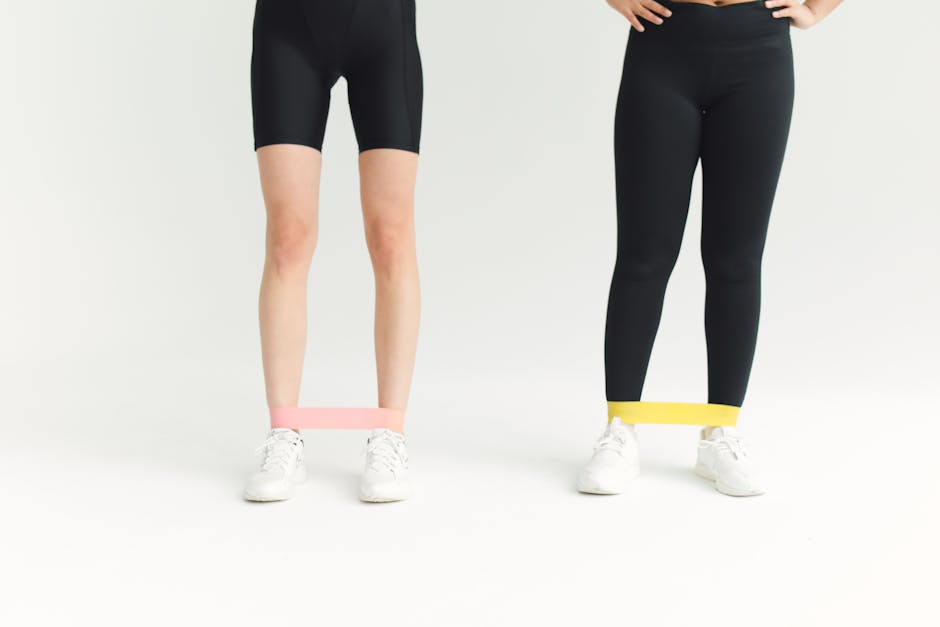
Loop bands are simple, closed-circle latex or synthetic bands with no handles or attachment points. They come in a wide range of resistance levels, typically 10–150 lbs, with clear pound-based labeling rather than vague color categories. Loop bands are highly versatile and can be doubled or layered to increase resistance during a single workout, making them ideal for progressive overload.
Best for lower-body exercises like glute bridges, lateral walks, and leg press variations. They're also compact, affordable, and have no moving parts to fail.
Best for: Budget-conscious buyers, lower-body focused workouts, and people who want to layer bands for variable resistance
Tube Resistance Bands with Handles
Tube bands feature a hollow latex or synthetic tube with handles on each end, often with an optional door anchor attachment. Resistance ranges from 5–40+ lbs depending on the band. The handles provide a secure grip and are easier on the hands during upper-body and functional movement exercises.
These bands are less versatile than loops for lower-body work because the handles limit positioning, but they excel at mimicking traditional dumbbell movements and cable machine exercises. Quality tube bands use natural latex or high-grade synthetic materials to prevent snapping.
Best for: Upper-body strength training, functional fitness, people with hand sensitivity, and those who want anchor-point exercises
Fabric Resistance Bands (Loop with Cloth Surface)
Fabric bands are loop-style bands wrapped in a cotton or nylon cloth exterior, typically rated 10–75+ lbs with standard color coding (yellow for light, red for medium, green for heavy, blue for extra heavy). The fabric surface provides grip comfort and prevents the band from rolling or pinching skin during dynamic movements.
They perform similarly to latex loops for exercise selection but with added comfort during extended or high-repetition workouts. Beginner ranges typically start at 10–30 lbs, intermediate at 30–60 lbs, and advanced at 60+ lbs.
Best for: Beginners and intermediate users who want comfort without sacrificing versatility, people sensitive to latex, and those doing high-rep glute or leg work
Therapy Resistance Bands (Light, Handled Loops)
Therapy bands are specifically designed for rehabilitation, physical therapy, and recovery work rather than strength building. They typically range from 2–15 lbs of resistance and often come with handles. Color coding varies by manufacturer—unlike standard bands—so always check actual pound ratings rather than assuming colors match across brands.
These bands prioritize safety, range of motion, and gradual resistance progression for people recovering from injury, managing chronic pain, or working under professional guidance. Durability and material quality are critical since improper band failure during therapy can cause re-injury.
Best for: People in physical therapy, post-injury recovery, chronic pain management, and anyone whose goal is mobility and pain-free movement rather than strength gains
Resistance Band Sets (Multiple Bands Together)
Multi-band sets bundle 4–5 bands of varying resistances in one purchase. Sets typically include light (5–15 lbs), medium (15–30 lbs), and heavy (30–50+ lbs) options, sometimes with handles, anchors, and carrying bags. This approach eliminates guesswork about which single band to buy and allows you to progress without repurchasing.
The trade-off: sets cost more upfront and may include resistance levels you don't need. Single-band purchases allow more precision but require confidence in resistance selection.
Best for: Beginners unsure of their starting resistance, people planning long-term progression, and those who want a complete toolkit without multiple purchases
Pros & Cons
Pros
✓ Color-coded and pound-labeled options make matching your fitness level objective—no guessing whether 'medium' is right for you
✓ Four distinct types (loop, tube, fabric, therapy) ensure you can select for your specific training goal: strength building, upper-body work, mobility, or rehabilitation
✓ Layering loop and fabric bands allows real-time resistance increases within a single workout without stopping to swap equipment
✓ Tube bands with handles and door anchors unlock cable and functional exercise patterns impossible with loops alone
✓ Therapy-specific bands with lower resistance ranges (2–15 lbs) safely support recovery-focused training that standard strength bands cannot
Cons
✗ Color-coding standards vary across manufacturers—especially for therapy bands—forcing you to verify actual pound ratings rather than trusting visual labels alone
✗ Latex-based bands can degrade quickly if stored in heat or sunlight; synthetic alternatives cost more but last longer
✗ Choosing between single bands (precision) and multi-band sets (convenience) requires upfront clarity about your starting resistance, which many beginners lack
Our Verdict
Loop bands are the best all-around choice for lower-body and functional fitness if you're willing to learn basic layering techniques and don't need handles. They're affordable, durable, and the pound-labeled ratings give you objective data for matching your fitness level. Beginners typically start with 10–30 lbs; intermediate users benefit from 30–60 lbs.
Tube bands with handles are essential if your primary focus is upper-body strength or functional movements like rows, presses, and cable-style exercises. The handle design prevents hand fatigue and allows door-anchor variations that loops can't replicate. They're the right choice if gripping a raw latex loop causes discomfort.
Fabric bands split the difference: they offer loop versatility with added grip comfort during high-rep lower-body work. If you're sensitive to latex or doing extended glute activation routines, the cloth surface prevents skin pinching and rolling. Cost is slightly higher than plain latex loops but lower than handled tube bands.
Therapy bands are non-negotiable if you're recovering from injury or working with a physical therapist. The lower resistance ranges (2–15 lbs) and safety-first design prevent re-injury. Standard strength bands are too heavy for true rehabilitation work. Always verify actual pound ratings on therapy bands since color coding varies wildly between manufacturers.
Multi-band sets make sense for beginners who are uncertain of their starting point or anyone planning 6–12 months of consistent training. The upfront cost is higher, but you eliminate the risk of buying a single band that's either too light (no progress) or too heavy (poor form, frustration). Advanced lifters typically outgrow sets and buy specific single bands for precision.
Frequently Asked Questions
What resistance should I start with if I'm a complete beginner?
Beginners typically need 10–30 lbs of resistance. Start conservatively: you should be able to perform 15–20 repetitions with good form. For therapy bands, the range is even lighter (2–15 lbs). If you're unsure, a multi-band set eliminates guessing by including multiple starting options.
Why do therapy band colors not match standard resistance band colors?
Therapy bands are designed by different manufacturers with different safety standards, and there's no universal color-coding system across brands. Always check the actual pound rating (e.g., '5 lbs' or '10 lbs') instead of relying on color alone. This is especially important for rehabilitation, where wrong resistance can cause re-injury.
Can I use loop bands for upper-body exercises, or do I need tube bands with handles?
You can use loop bands for upper-body work, but it's less convenient. Handles make upper-body exercises easier on the hands and allow door-anchor cable variations that loops can't replicate without creative rigging. If upper-body is your primary focus, tube bands are worth the investment.
Should I buy a single band or a multi-band set?
Buy a set if you're a beginner or unsure of your starting resistance level—it eliminates guessing and supports 6–12 months of progression. Buy single bands if you're experienced, know exactly which resistance you need, and want to customize your collection over time without paying for unused resistances.
How do I know if my resistance band is too heavy or too light?
Too light: you can do 30+ reps with perfect form and feel no challenge. Too heavy: you can't complete 8–10 reps with good form, or you're compensating with momentum or poor technique. Aim for 12–15 reps at moderate difficulty. If that range feels easy, upgrade to the next resistance level.
What's the difference between loop bands and therapy bands?
Loop bands are designed for strength building and come in higher resistances (10–150+ lbs). Therapy bands are designed for rehabilitation and mobility and come in lower resistances (2–15 lbs) with safety-focused materials. Using a strength band for therapy work risks re-injury; using a therapy band for serious strength training wastes your potential.
Can I layer bands together to increase resistance during a workout?
Yes, and it's one of the strongest advantages of loop and fabric bands. Doubling or tripling bands increases total resistance and allows real-time progression without stopping. Tube bands with handles don't layer as easily. This makes loops ideal for drop-set training or progressive burnouts.
Our team evaluates home gym gear, training tools, and workout accessories so you don't have to. Every recommendation is based on real research: customer reviews, expert opinions, and value for money. Learn more about us →
This post contains affiliate links. We may earn a commission if you purchase through our links at no extra cost to you.