By Best Fitness Picks Daily • July 21, 2026 • Contains affiliate links
Affiliate Disclosure: As an Amazon Associate, we earn from qualifying purchases. Clicking our links costs you nothing extra and helps us keep reviewing products for free.
Resistance bands have become essential home gym tools, but the market offers several distinct types—each with different advantages for strength training. Loop bands, fabric-wrapped bands, long therapy-style bands, and pull-up assist bands serve different training needs and fitness levels, and picking the wrong type means either struggling through workouts or abandoning your routine altogether.
Check the resistance level and material thickness before purchasing, as fabric bands provide the most comfort during upper body exercises while loop bands offer superior durability for lower body work, so choose based on your primary training focus. Additionally, verify that the band's resistance range matches your current strength level and has room to progress, since most quality bands come in color-coded tensions that can vary significantly between brands.
This guide compares the main resistance band categories available today: their resistance ranges, durability profiles, comfort during use, and specific training applications. We've drawn from real product specifications and user feedback to show you which option makes sense for your space, current fitness level, and training goals.
Loop Resistance Bands (Closed-Loop Circle Bands)
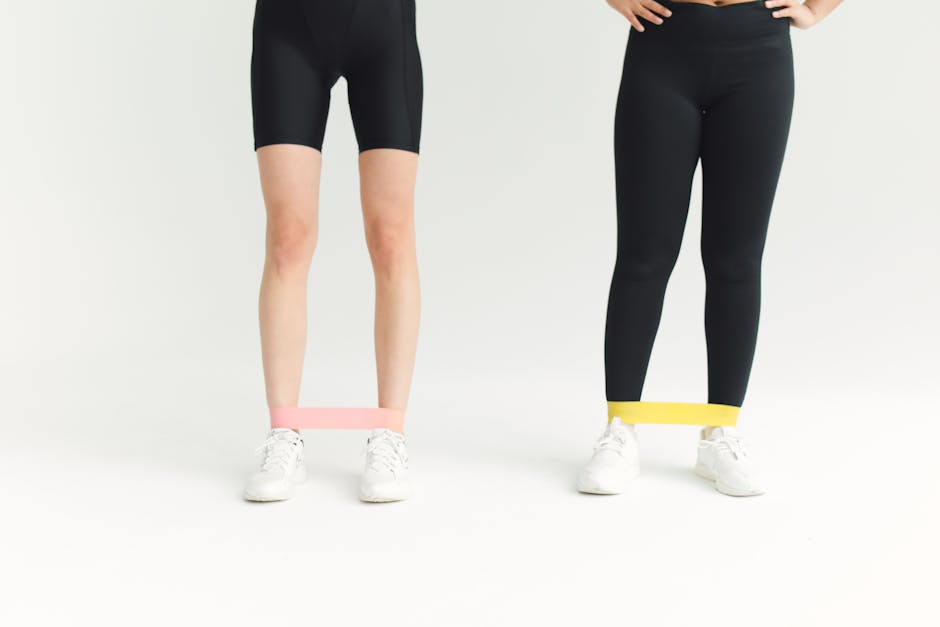
Loop bands are continuous circles of elastomer, typically 4.5mm thick or more, available in color-coded resistance levels ranging from 10 lbs to 150+ lbs. They're compact, portable, and require no anchoring equipment for many exercises like lateral walks, glute activation, and banded squats.
The primary advantage is portability and space efficiency—a set takes up minimal room in a drawer or gym bag. However, they offer limited range for certain pulling movements and typically require good form discipline to prevent rolling or bunching during lateral work.
Best for: Intermediate and advanced lifters doing lower-body isolation work, glute training, shoulder activation, or travel-friendly home workouts in small spaces.
Fabric-Wrapped Resistance Bands
Fabric bands combine a natural latex core with a cotton or polyester blend outer layer, creating a textured surface that prevents rolling and reduces skin irritation. Resistance typically ranges from 5 to 150+ pounds, and they're available in sets with multiple resistance levels for progressive training.
The fabric weave (higher thread count = longer lifespan) dramatically improves comfort during extended workouts and prevents the band from riding up or bunching. These bands more closely mimic the resistance curve of free weights and feel less likely to snap under stress compared to bare rubber loops, making them psychologically more reliable for heavy pulling movements.
Best for: Anyone with sensitive skin, lifters prioritizing durability, and those wanting a natural resistance progression that feels more like traditional strength training with dumbbells.
Long Therapy-Style Resistance Bands
Long bands are thin, flat elastomer strips (typically 4-6 feet in length) with no handles, rated from 5 to 100+ lbs of resistance. They're versatile for rows, chest presses, lateral raises, and can be anchored to doors, racks, or belts. Stackability is a key feature—multiple bands layer together to increase total resistance for progressive overload.
These excel in compact spaces and offer maximum exercise variety due to their length and ability to anchor at different heights. The trade-off is hand grip fatigue during heavy pulling movements and a less intuitive feel for beginners compared to banded loop workouts.
Best for: Progressive strength trainers needing variable resistance, those with minimal space, and lifters doing upper-body pulling and pressing movements.
Pull-Up Assist Resistance Bands
Pull-up bands are heavy-duty loops (typically 4.5mm+ thickness) specifically engineered for vertical pulling assistance, with resistance spanning 10 lbs (light—for high-rep assistance) to 150+ lbs (heavy—for beginners or rehabilitation). They're mounted on a pull-up bar and your feet or knees anchor into the band to reduce your effective bodyweight.
Unlike general-purpose loop bands, pull-up assist bands are thicker and tested for the specific stress of explosive pulling movements. Honest assessment of current strength is critical: if you can't do a single unassisted pull-up, you'll need 80–120 lbs of assistance to start; intermediate lifters use 50–80 lbs to add volume.
Best for: People working toward their first pull-up, intermediate lifters building pull-up volume, and those recovering from injury or returning to training after time off.
Resistance Bands with Handles
Handle bands combine a loop or therapy-band core with molded or cushioned grip handles, typically rated 5–100+ lbs. They're designed for exercises mimicking cable machine movements: chest presses, bicep curls, and shoulder raises, and reduce hand fatigue during high-rep work.
The handles add comfort and reduce grip fatigue, making them ideal for isolation work. However, they're less portable, slightly less durable at the attachment point (where handles meet the band), and typically more expensive than plain loop or long bands.
Best for: Lifters doing high-rep isolation exercises, those with grip sensitivity, and anyone seeking a closer simulation of traditional gym cable movements.
Pros & Cons
Pros
✓ Loop and long bands are extremely portable—a full set fits in a drawer or gym bag
✓ Stackable resistance allows progressive overload without buying multiple sets or heavier dumbbells
✓ Bands enable exercise variety unmatched by fixed weights: hundreds of angles, anchoring points, and movement patterns
✓ Low cost compared to dumbbells or cable machines for the same resistance range coverage
✓ Minimal space requirement—suitable for small apartments, hotel rooms, or offices
Cons
✗ Bare rubber or thin bands (under 4.5mm) snap under heavy stress or frequent use, requiring replacement
✗ Loop bands roll or bunch during lateral movements without proper form discipline or premium construction
✗ Long bands create hand fatigue during heavy pulling compared to handles or bars
✗ Resistance progression is nonlinear—bands get progressively harder as they stretch, unlike weights which stay constant
✗ Beginner lifters often struggle with proper form and band anchoring, leading to ineffective workouts
✗ Handle attachment points are failure points; lower durability than seamless loops
Our Verdict
The best choice depends on your training focus and space constraints. If you're doing lower-body and glute work in a small space, loop bands (especially 4.5mm+ thickness) offer unbeatable portability. For upper-body pulling and pressing with a home gym focus, fabric-wrapped long bands or sets with multiple resistance levels provide the most forgiving experience and longevity—the fabric prevents rolling and skin irritation that make people abandon their routine. Pull-up assist bands are essential only if pull-ups are a priority; otherwise, general-purpose heavy loop or long bands suffice. Handle bands justify the extra cost only if you're doing high-rep isolation work and have grip sensitivity.
For most people building a complete home strength setup, the optimal combination is a fabric-wrapped multi-resistance set (5–150 lbs) for upper-body pressing and pulling, paired with one or two heavyweight loop bands (50–100+ lbs) for lower-body and glute work. This covers 95% of strength training movements without taking up closet space or breaking the budget. Avoid thin (under 4.5mm) bare rubber bands for heavy training; the durability loss isn't worth the marginal cost savings.
Frequently Asked Questions
What resistance level should I start with?
Begin with light (5–15 lbs) for warm-ups and isolation work, medium (15–50 lbs) for general strength training if you're a beginner, and heavy (50–100+ lbs) only if you can already perform 5+ unassisted pull-ups or have years of lifting experience. A set with multiple resistance levels lets you scale as you progress without repurchasing.
Are fabric bands worth the extra cost over rubber?
Yes, if you plan to use them regularly. Fabric prevents rolling during lateral movements and eliminates skin irritation that causes people to quit. The tighter weave also extends lifespan; you'll replace rubber bands multiple times before a quality fabric band fails.
Can I use long bands instead of loop bands for everything?
Mostly, but not optimally. Long bands excel at anchored movements (rows, presses, pull-ups), but loop bands are superior for lateral work (walks, side-lying raises) because they stay in place. Most serious lifters use both types.
How thick should a resistance band be to avoid snapping?
Premium bands should be at least 4.5mm thick. Anything thinner will eventually snap under regular heavy stress. Measure thickness before buying; 'premium' marketing claims without specification often hide thin, low-durability bands.
Do I need handles on my resistance bands?
Only if you're doing high-rep isolation work (curls, lateral raises) where grip fatigue is limiting you. For compound movements and pull-ups, plain loops or long bands are more durable and equally effective.
What's the best resistance band for pull-ups?
If you can't do a single unassisted pull-up, start with 80–120 lbs of assistance (a heavy pull-up band or stacked loops). If you can do 3–5 pull-ups, use 50–80 lbs to add volume. As you progress, drop to lighter bands. Honesty about current ability prevents both wasted effort and excessive assistance that doesn't build strength.
Our team evaluates home gym gear, training tools, and workout accessories so you don't have to. Every recommendation is based on real research: customer reviews, expert opinions, and value for money. Learn more about us →
This post contains affiliate links. We may earn a commission if you purchase through our links at no extra cost to you.