Affiliate Disclosure: As an Amazon Associate, we earn from qualifying purchases. Clicking our links costs you nothing extra and helps us keep reviewing products for free.
By Best Fitness Picks Daily • July 24, 2026 • Contains affiliate links
When summer temperatures soar, your workout clothes shift from optional comfort to performance necessity. The difference between moisture-wicking synthetics and cotton, between seamless construction and basic seams, between strategic ventilation and standard fabric—these details directly impact whether you complete your training session or cut it short.
Look for moisture-wicking fabrics with breathable mesh panels in high-sweat areas like underarms and back, as these technologies significantly improve comfort during intense workouts compared to standard cotton blends. Check the fabric weight and seam placement—lighter materials (under 4 oz) with flatlock or bonded seams prevent chafing when wearing the clothes for extended treadmill or resistance training sessions.
The challenge is that "hot weather workout clothes" encompasses vastly different fabric technologies, design features, and price points. A $25 polyester tee works differently than a $60 premium blend with mesh panels and anti-microbial treatment. This guide cuts through marketing claims and compares the actual fabric technologies, construction methods, and fit considerations that matter when training in heat.
Synthetic Blend Fabrics (Polyester & Nylon)
Polyester and nylon blends form the foundation of modern hot weather athletic wear. Unlike cotton, which absorbs moisture and clings to skin, synthetic blends pull sweat away from your body through capillary action, allowing faster evaporation. These materials dry quickly—typically 30-50% faster than cotton—preventing the heavy, soggy feeling that impedes performance during extended summer training.
Advanced synthetic blends incorporate four-way stretch technology, allowing your clothing to move with your body rather than restrict it. This elasticity is particularly valuable during high-intensity workouts where your range of motion matters.
Best for: Anyone doing outdoor runs, gym training, or any sustained activity in heat. Essential for competitive athletes and those training for distance events.
Mesh Panel Ventilation Systems
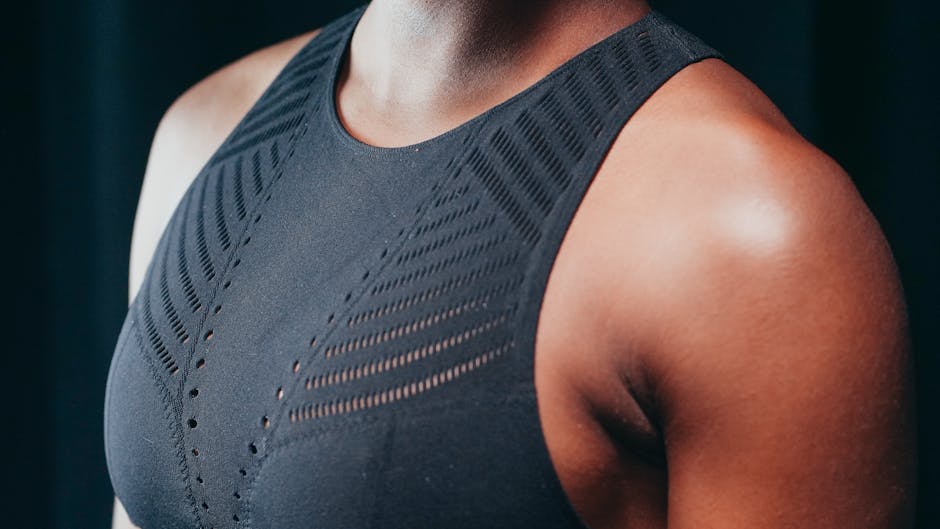
Strategic mesh panels and perforations target your body's primary heat zones—underarms, back, and side panels—where sweat concentration is highest. These ventilation zones allow direct airflow rather than relying solely on fabric breathability. Mesh construction reduces weight while maintaining structural integrity, creating localized cooling without compromising garment durability.
Premium brands integrate mesh strategically rather than using it throughout the entire garment, which balances cooling performance with support and aesthetic appeal. This targeted approach prevents excessive transparency while maximizing heat dissipation where it matters most.
Best for: Outdoor runners, gym-goers, and anyone whose training routines occur in genuinely hot environments (above 80°F). Less critical for indoor air-conditioned gym work.
UPF-Rated Outdoor Activewear
Ultraviolet Protection Factor (UPF) ratings measure how effectively fabric blocks harmful UV rays. UPF 50+ fabrics block 98% of UVA and UVB radiation, providing sun protection equivalent to sunscreen SPF ratings. For outdoor summer training, UPF-rated garments eliminate the need for constant sunscreen reapplication and reduce skin damage risk during extended sessions.
UPF protection is built into premium synthetic blends and doesn't require special treatment—it's a fabric property that maintains through multiple wash cycles. This makes UPF consideration essential for any serious outdoor training regimen.
Best for: Outdoor athletes, trail runners, and anyone training in direct sunlight for 30+ minutes. Less relevant for indoor gym-only training.
Seamless Construction vs. Standard Seams
Seamless construction eliminates the chafing points where traditional seams dig into skin during repetitive movement. For runners and high-intensity athletes, seam placement becomes a primary pain point during 45+ minute sessions. Seamless garments distribute friction evenly across fabric rather than concentrating pressure along seam lines.
Standard seams cost less to produce and remain adequate for shorter workouts (under 45 minutes) or lower-impact activities. However, they create visible rubbing patterns and can cause blisters during distance training in hot conditions when sweat intensifies friction.
Best for: Distance runners, triathletes, and anyone training longer than 45 minutes. Gym-goers doing typical 30-minute sessions can skip seamless features without performance loss.
Anti-Microbial Treated Fabrics
Anti-microbial treatments inhibit bacteria and odor-causing microorganisms, reducing funk buildup during long training sessions and between washes. These treatments don't prevent sweating—they prevent the bacterial decomposition of sweat that creates smell. Premium fabrics maintain this treatment through multiple wash cycles, unlike cheaper additives that degrade quickly.
Anti-microbial treatment is optional for gym wear worn once or twice before washing, but becomes genuinely useful for multi-day training trips or outdoor athletes who wear the same gear across consecutive sessions.
Best for: Athletes doing back-to-back training days, travelers, or anyone training in remote locations without frequent laundry access. Standard gym-goers washing after each session don't see meaningful benefit.
Pros & Cons
Pros
✓ Synthetic blends dry 30-50% faster than cotton, preventing heavy moisture clinging during performance
✓ Strategic mesh ventilation in heat zones delivers localized cooling without sacrificing garment durability or support
✓ Four-way stretch fabrics maintain full range of motion during high-intensity movement and recovery exercises
✓ UPF 50+ protection blocks 98% of harmful UV rays, eliminating constant sunscreen reapplication during outdoor sessions
Cons
✗ Premium features (seamless construction, mesh panels, anti-microbial treatment) significantly increase cost compared to basic synthetic options
✗ Synthetic blends can trap heat in low-ventilation designs; fabric technology alone cannot compensate for poor garment construction
Our Verdict
No single fabric or feature solves hot weather training—success requires matching technology to your specific activity. For outdoor runners and distance athletes: prioritize synthetic blends (polyester/nylon) with mesh ventilation panels and UPF protection; seamless construction becomes essential beyond 45-minute sessions. The combination addresses moisture management, sun protection, and chafing prevention simultaneously. For gym-only training in air-conditioned spaces: basic polyester-blend garments with standard seams deliver 80% of the performance benefit at 40% of premium pricing. For multi-day training trips or back-to-back sessions: anti-microbial treatment justifies premium pricing by reducing laundry frequency. APE BORN's integration of these features (high-performance synthetic blends with strategic mesh and anti-microbial properties) represents the premium option, but that investment only makes sense if you're actually utilizing the features your activity demands. A casual gym-goer prioritizes differently than an ultramarathon trainer—matching technology to activity intensity ensures you're not paying for features that remain unused.
Frequently Asked Questions
What's the actual performance difference between cotton and synthetic blends in hot weather?
Cotton absorbs moisture and retains it against your skin, creating a heavy, soggy feeling that can reduce performance and increase chafing. Synthetic blends (polyester/nylon) pull sweat away through capillary action and dry 30-50% faster, keeping your body temperature regulated and preventing the weight and friction of absorbed moisture. For anything beyond 20-minute casual activity, synthetics significantly outperform cotton in heat.
Do I really need UPF protection if I'm only training 30 minutes?
UV damage accumulates over time, not just during single sessions. However, 30-minute sessions pose minimal sun exposure risk compared to 60+ minute outdoor training. If you're doing multiple training sessions weekly, cumulative UV exposure becomes significant. UPF protection is essential for serious outdoor athletes; casual gym-goers and those training primarily indoors can skip it without consequence.
Is seamless construction worth the extra cost?
Seamless construction becomes valuable when training sessions exceed 45 minutes or involve high-friction movement (running vs. yoga). For typical 30-minute gym sessions, standard seams cause no meaningful chafing. Seamless garments justify premium pricing only if your training routine actually subjects you to extended friction conditions.
How often do premium fabrics actually maintain their moisture-wicking properties?
High-quality synthetic blends maintain moisture-wicking performance through 50+ wash cycles with proper care (cold water, avoid fabric softener). The fabric property doesn't degrade; durability is primarily a factor of fiber quality and construction integrity. Budget-friendly synthetic blends often fail due to seam splitting or fiber breakdown rather than loss of moisture-wicking function.
What's the difference between gym wear and outdoor workout clothes?
Outdoor workout clothes require UPF protection and typically feature more mesh ventilation to handle direct sun and higher ambient temperatures. Gym wear can skip UPF entirely and use less ventilation since air conditioning controls temperature. Your specific training environment should drive feature selection—don't pay for outdoor features if you train exclusively indoors.
Our team evaluates home gym gear, training tools, and workout accessories so you don't have to. Every recommendation is based on real research: customer reviews, expert opinions, and value for money. Learn more about us →
This post contains affiliate links. We may earn a commission if you purchase through our links at no extra cost to you.