By Best Fitness Picks Daily • July 21, 2026 • Contains affiliate links
Affiliate Disclosure: As an Amazon Associate, we earn from qualifying purchases. Clicking our links costs you nothing extra and helps us keep reviewing products for free.
Choosing a weight bench isn't straightforward—the market offers fundamentally different types, each engineered for different training goals, spaces, and budgets. A flat bench excels at foundational strength work and costs the least. An adjustable bench multiplies your exercise options from one piece of equipment. An Olympic bench prioritizes barbell compatibility and durability for serious lifters. Without understanding these distinctions, you risk buying equipment that doesn't match how you actually train.
When comparing weight benches, check the maximum weight capacity and ensure it exceeds your combined body weight plus the heaviest load you plan to lift, as this directly impacts safety and durability across flat, adjustable, and Olympic models. Additionally, measure your available floor space and account for the bench's footprint when fully reclined or adjusted, since adjustable benches typically require more room than flat models.
This guide compares these three primary bench categories with real trade-offs: cost, versatility, durability, space requirements, and load capacity. We'll help you match your training approach to the bench type that genuinely serves your needs—not what marketing claims sound best.
Flat Weight Benches
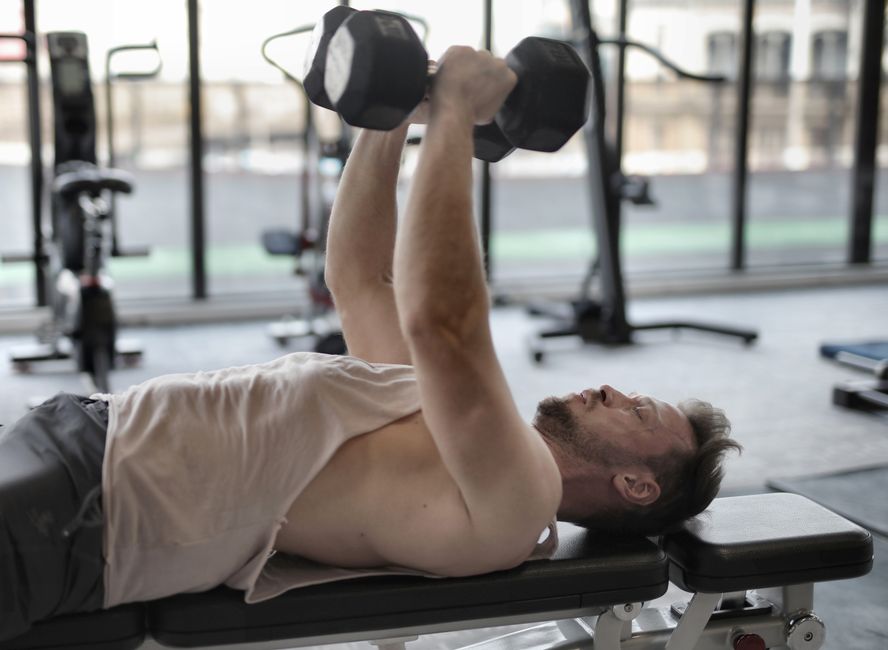
Flat benches are the most straightforward option: a stationary platform with no angle adjustment. They excel for barbell bench pressing, dumbbell rows, and core work, and typically feature solid steel frames. Flat benches are the most affordable entry point into dedicated bench training and require minimal floor space, making them practical for smaller home gyms.
The trade-off is versatility. Unlike adjustable models, flat benches lock you into one angle, meaning you can't easily target upper chest with incline angles or core with decline work from the same piece of equipment. This single-position design limits exercise variety.
Best for: Beginners and lifters with limited space or budget who prioritize core compound movements like dumbbell press and barbell bench press; minimalists wanting durability over variety.
Adjustable Multi-Position Benches
Adjustable benches offer incline, decline, and flat positions from a single unit, allowing you to target different muscle groups without buying multiple pieces of equipment. Premium models like those from FED Fitness feature commercial-grade padding, precision ball bearings, and heavy-duty construction rated for serious weight loads. This versatility lets you perform upper chest work on incline, lower chest on decline, and core training on decline positions.
The trade-off is complexity and cost. Adjustable models typically cost $300 or more—significantly higher than flat benches. Adjustment mechanisms can wear over time, and the engineering required for multiple positions adds complexity. Some adjustment systems are also slower to reconfigure between sets, and the larger footprint requires more storage space.
Best for: Intermediate to advanced lifters seeking exercise variety without buying multiple benches; those wanting to hit muscle groups from multiple angles; lifters with moderate to higher budgets who value flexibility; bodybuilders performing isolation exercises.
Olympic/Competition-Grade Benches
Olympic benches are engineered specifically to accommodate Olympic-sized barbells and standard Olympic weight plates. These benches often come with built-in plate storage and are constructed for serious durability and load capacity. They bridge the gap between adjustable benches and dedicated powerlifting equipment, offering both versatility and dedicated barbell support for athletes serious about strength training.
Olympic benches prioritize stability during intense barbell work and integrate seamlessly with power racks and barbell systems. Manufacturers like FED Fitness offer Olympic benches built specifically for this purpose. The trade-off is higher cost than flat or basic adjustable options, and a larger overall footprint due to barbell supports and plate storage.
Best for: Powerlifters and advanced strength athletes; those planning a dedicated home gym with heavy barbell training as a centerpiece; lifters committed to Olympic or powerlifting-style training who need specialized stability and compatibility.
Pros & Cons
Pros
✓ Flat benches cost the least and occupy minimal floor space, making them practical for tight budgets and small home gyms
✓ Adjustable benches expand your exercise library significantly—incline, decline, and flat positions from one piece of equipment eliminate the need to buy multiple benches
✓ Olympic benches provide maximum stability and load capacity for serious barbell training, with built-in plate storage for organization
✓ Premium adjustable and Olympic models feature commercial-grade padding and precision mechanisms designed to handle serious weight loads and withstand heavy use
Cons
✗ Flat benches lock you into one angle, limiting your ability to target muscle groups at different angles—you'll perform fewer exercise variations from a single flat bench
✗ Adjustable benches cost significantly more ($300+), have more complex mechanics that can wear over time, and require more storage space than flat benches; reconfiguring between sets can be slower depending on the adjustment system
Our Verdict
Flat benches win for budget-conscious beginners and lifters focused on foundational compound movements. At the lowest price point with maximum stability, they're ideal if your routine centers on barbell bench press and dumbbell work. However, you'll sacrifice exercise variety.
Adjustable benches win for intermediate to advanced lifters building a well-rounded home gym within one piece of equipment. Models from FED Fitness and similar manufacturers justify the $300+ cost if you want to target upper chest (incline), lower chest (decline), and core work (decline) from the same bench. This versatility appeals to bodybuilders and lifters who want comprehensive upper-body training variety without buying multiple benches.
Olympic benches win for serious strength athletes committed to barbell training who can justify the higher cost. They prioritize maximum load capacity, stability during heavy compound lifts, and integration with power racks and barbell systems. Built-in plate storage also maximizes organization in a dedicated home gym.
Your choice ultimately depends on three factors: training style (Are you primarily using barbells or dumbbells? Do you want to train at multiple angles?), space and budget (Can you afford $300+? Do you have room for a larger footprint?), and long-term commitment (Is this a casual home gym or a serious strength training setup?). Most lifters fall into one of these three categories—matching your answer to that category will eliminate the guesswork.
Frequently Asked Questions
What's the key difference between a flat bench and an adjustable bench?
Flat benches provide a single fixed angle optimized for foundational pressing movements and are the most affordable option. Adjustable benches allow you to change angles (incline, decline, flat), expanding your exercise library significantly—but at $300+ and with greater mechanical complexity. Choose a flat bench if exercise variety isn't a priority; choose adjustable if you want to target multiple muscle groups from one piece of equipment.
Can I use an Olympic bench for exercises other than barbell work?
Yes. Olympic benches accommodate barbell training but can also be used for dumbbell exercises and bodyweight work. However, they're engineered and priced specifically for barbell compatibility and durability, so if you primarily use dumbbells, a flat or adjustable bench is more cost-effective.
Which bench type is best for a small home gym with limited space?
Flat benches. They occupy the smallest footprint and offer maximum stability at the lowest price. If you want adjustability but have tight space, some adjustable models fold or have smaller footprints than full Olympic benches, though they'll still take more room than a flat bench when stored.
Do adjustable benches sacrifice stability compared to flat benches?
Quality adjustable models—especially commercial-grade options with precision ball bearings—are designed to handle serious weight loads with minimal stability loss. However, the mechanism complexity means more components can wear over time. Flat benches remain simpler and theoretically more durable, but a premium adjustable bench from a reputable manufacturer should perform reliably for years.
Why would I buy an Olympic bench instead of an adjustable bench?
Olympic benches are engineered specifically for heavy barbell training with maximum load capacity and barbell-compatible frames that integrate with power racks. If you're performing serious barbell work and want maximum stability and built-in plate storage, an Olympic bench is worth the premium. Adjustable benches are better if you want variety (incline/decline positions) without Olympic barbell specificity.
Our team evaluates home gym gear, training tools, and workout accessories so you don't have to. Every recommendation is based on real research: customer reviews, expert opinions, and value for money. Learn more about us →
This post contains affiliate links. We may earn a commission if you purchase through our links at no extra cost to you.