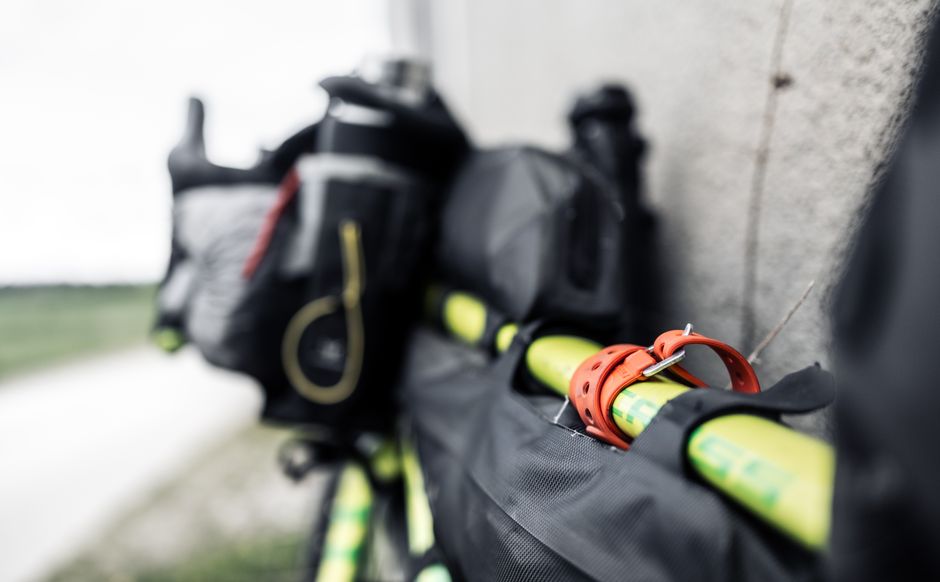
Photo: Marek Piwnicki / Pexels
Ask ten cyclists where to put your stuff and you'll get ten answers. Handlebar bags are the fast-access option — phone, snacks, keys, a packable jacket, all reachable without stopping. Frame bags sit low inside the main triangle, keep weight off your steering, and swallow tools, tubes and a surprising amount of food. ROCKBROS makes both, usually at a third of the price of the premium bikepacking brands, which is exactly why the question "which one should I actually buy?" is worth taking seriously.
This isn't a ROCKBROS advertisement dressed up as a comparison. Below, we put ROCKBROS handlebar and frame bags side by side with three genuine competitors people actually cross-shop: Ortlieb (the German waterproofing benchmark), Topeak (the commuter-focused hardware specialist), and Apidura (the UK bikepacking brand favoured by ultra-distance riders). Each of these brands beats ROCKBROS at something specific — and loses to it at something else.
When evaluating ROCKBROS Handlebar Bag vs. Frame Bag: Which Cycling Storage Should You Buy in 2026?, the key factors to consider are build quality, long-term durability, and whether it genuinely solves the problem it claims to address.
We'll cover real price bands, real capacities, real failure points, and finish with a verdict that tells you which bag wins for commuting, for bikepacking, and for the rider who just wants somewhere to stash a phone and a banana.
These bags solve different problems, and the "versus" framing hides that. A handlebar bag (typically 1–3L for the commuter style, 5–15L for the bikepacking harness style) puts things at eye level and within reach while riding. The trade-off is real: weight on the bars slows your steering, can interfere with cables and brake hoses on modern integrated cockpits, and anything heavy up there makes a bike feel twitchy on descents. A frame bag (1.5–6L depending on your triangle) puts the load low and central, which is the single best place on a bicycle for weight — you barely feel a full frame bag. The trade-offs are that you can't reach most of it while pedalling, a full-triangle bag blocks your bottle cages, and fit is frame-specific in a way handlebar bags are not. Short version: frame bag for weight you carry all day, handlebar bag for things you need in the next ten minutes. Most experienced riders eventually run both.
ROCKBROS' strength is price-to-feature ratio. Their handlebar bags typically run roughly $18–$35, and their frame/top-tube bags around $15–$30 — that's often a quarter of what Ortlieb or Apidura charge for the equivalent capacity. You still get features that were premium-only a few years ago: TPU-coated or PU-coated polyester shells, reflective piping, phone-window top tube bags with touch-sensitive film, hook-and-loop mounting straps with anti-slip pads, and on the handlebar models, a detachable shoulder strap and a quick-release bracket. Build quality is genuinely decent for the money — YKK-style zips on the better models, tidy bar-tack stitching at stress points. Where they compromise is in the details that only show after 18 months: zips are water-resistant rather than truly sealed, seams are stitched and taped rather than welded, and the plastic quick-release brackets have less long-term UV resistance than aluminium hardware. For riders who want to browse the full ROCKBROS bag range without spending premium money, that's a rational trade.
Ortlieb's Ultimate Six handlebar bag range (roughly $130–$200 depending on size and whether you take the Free version with the aluminium Ultimate Mounting Set) and the Frame-Pack (around $95–$130) are the reference point for wet-weather riding. The reason is construction, not marketing: Ortlieb uses RF-welded PVC-free laminates and roll-top or fully sealed closures, so the bag is genuinely IP64-rated waterproof, not "water-resistant if the rain isn't sideways." The Ultimate Six mounting bracket is the other differentiator — it's a rigid, lockable, one-handed click system that holds a loaded bag rock-steady, where cheaper Velcro straps allow sway on rough tarmac. The downside is obvious: you're paying 4–6x ROCKBROS money, the hard bracket doesn't fit every integrated aero cockpit, and Ortlieb bags are heavier and less flexible in shape. If your commute is year-round in Manchester, Portland or Vancouver, Ortlieb is worth the money. If you ride in dry conditions, you're buying waterproofing you'll never test.
Topeak sits in the middle ground — roughly $45–$90 for handlebar bags like the TourGuide Handlebar Bag DX, and similar for their Midloader and Toploader frame bags. Their genuine advantage is the mounting ecosystem: the Fixer bracket system and QuickClick mounts are engineered hardware, and Topeak's bags integrate with their racks, seatposts and Tri-bags in a way no budget brand matches. The TourGuide includes a rain cover, map sleeve, and a well-designed rigid internal structure so the bag doesn't sag when half-full — a real weakness of soft ROCKBROS handlebar bags. Topeak's frame bags are also more thoughtfully shaped for bottle-cage coexistence. Where Topeak loses is weight and outright waterproofing: it needs the supplied rain cover in a downpour, and the bags are noticeably heavier than the fabric-only bikepacking designs from Apidura or ROCKBROS.
If you're doing multi-day, off-road, or ultra-distance riding, Apidura is the relevant comparison — not Ortlieb or Topeak. The Expedition and Racing series handlebar packs (around $130–$190) and frame packs (around $110–$180) use Hexalon and VX21 fabrics, welded seams, and a strap system designed to survive being loaded, bounced and re-cinched thousands of times. Apidura frame packs come in genuinely useful size ranges and offer a custom fit programme, which matters because a badly-fitted frame bag rubbing your down tube will wear paint through in one season. Apidura's handlebar packs are also engineered around drop bars with limited clearance — an area where cheap harnesses foul the cables. The catch is price and specificity: Apidura is expensive, offers little in the way of casual commuter features (no map window, no shoulder strap, no coffee-shop styling), and is genuinely overkill if your longest ride is a 20-mile Sunday loop.
Waterproofing: Ortlieb > Apidura > Topeak (with cover) > ROCKBROS. Mounting stability under load: Ortlieb and Topeak brackets > Apidura straps > ROCKBROS Velcro. Weight: Apidura and ROCKBROS (light) > Topeak and Ortlieb (heavy hardware). Price per litre: ROCKBROS wins by a wide margin. Long-term durability: Apidura and Ortlieb are the ones you'll still be using in 2032. Everyday convenience features — phone windows, shoulder straps, reflective detailing, small organiser pockets — ROCKBROS and Topeak lead, and the bikepacking brands barely bother.
There's no single winner here, only right answers for specific riders. If you commute year-round in genuinely wet weather, buy the Ortlieb — the waterproofing and the rigid bracket are the product, and no amount of saving justifies a soggy laptop. If you're doing multi-day bikepacking or gravel racing, Apidura's frame packs are the correct spend; the fit, the fabric and the strap durability are worth every pound on day four of a tour. If you want an integrated commuter setup with racks and trunk bags, Topeak's ecosystem is the smartest mid-price choice. ROCKBROS wins for everyone else — the rider commuting in mostly-dry conditions, the weekend explorer, the person who wants a handlebar bag and a frame bag for under $50 total, or anyone who isn't yet sure which carrying style suits them. On the original question of handlebar versus frame: buy the frame bag first if you carry tools and food on longer rides, and the handlebar bag first if your priority is reaching your phone, wallet and snacks without stopping. If budget allows both, ROCKBROS is the only brand on this list where owning both is a trivial decision.
Shop Rockbros →Water-resistant. Most ROCKBROS bags use coated polyester with stitched seams and standard zips, which handles light rain and road spray fine but will let water in during a sustained downpour. For genuine waterproofing you need welded seams and a roll-top or sealed closure — that's what Ortlieb and Apidura charge extra for. A cheap dry bag liner inside a ROCKBROS bag closes most of that gap for a few dollars.
It can. Bags with rigid brackets, including Ortlieb's Ultimate Mounting Set and some Topeak Fixer mounts, need a round section of bar with clearance for the clamp, which many integrated cockpits don't have. Soft strap-mounted bags from ROCKBROS and Apidura are far more forgiving here. Measure the clear bar space either side of your stem before buying anything with a hard bracket.
Yes, if you choose the right size. Half-frame and top-tube-hugging bags (the most common ROCKBROS and Topeak Midloader style) leave the down tube cage usable. Full-triangle bags — common in the Apidura and Ortlieb Frame-Pack range — usually block both cages, so bikepackers pair them with fork-mounted bottle cages or a hydration bladder inside the bag itself.
Found this helpful? Share it!
Our team evaluates home gym gear, training tools, and workout accessories so you don't have to. Every recommendation is based on real research: customer reviews, expert opinions, and value for money. Learn more about us →
This post contains affiliate links. We may earn a commission if you purchase through our links at no extra cost to you.
← Back to Best Fitness Picks Daily| Retailer | Price Range | Shipping | Link |
|---|---|---|---|
| Amazon | Check Current Price | Free (Prime) | View on Amazon → |
| Walmart | Check Site | Free over $35 | Search → |
| Target | Check Site | Free over $35 | Search → |
Prices may vary. Click through to each retailer for current pricing.