Affiliate Disclosure: As an Amazon Associate, we earn from qualifying purchases. Clicking our links costs you nothing extra and helps us keep reviewing products for free.
By Best Fitness Picks Daily • July 20, 2026 • Contains affiliate links
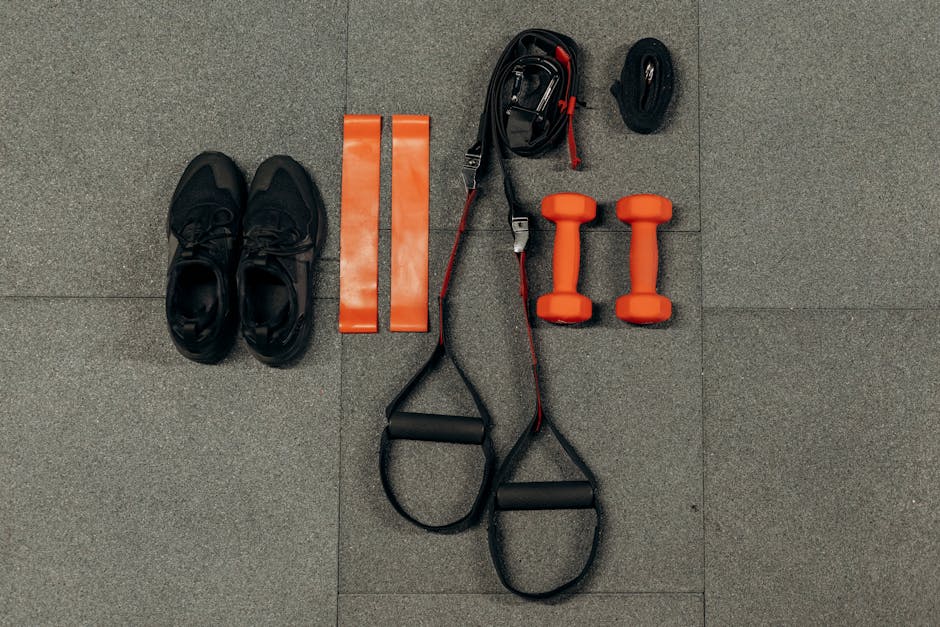
Resistance bands and free weights are the two dominant tools for building strength at home, but they operate on fundamentally different mechanical principles. Free weights like dumbbells and barbells provide constant, gravity-based resistance throughout every rep. Resistance bands, by contrast, deliver variable resistance that increases as you stretch them—minimal at the starting position and maximum at peak contraction.
If space is limited, resistance bands offer superior storage efficiency since multiple resistance levels can fit in a small drawer, whereas dumbbells require proportionally more room as you add weight increments to your collection. However, verify that the bands' resistance ratings match your strength level and progressive training needs, as free weights provide more intuitive weight progression for serious lifters.
The choice between them isn't about one being universally "better." Instead, it depends on your specific goals, training style, joint health, available space, and budget. This guide breaks down the real differences so you can decide which (or whether you need both) fits your situation.
Free Weights (Dumbbells & Barbells)
Traditional free weights provide constant resistance via gravity. A 20-pound dumbbell weighs 20 pounds at the bottom, middle, and top of any lift. This consistency makes progressive overload straightforward: you simply add 5 pounds when the current weight becomes manageable. Free weights engage stabilizer muscles throughout the range of motion because the load must be balanced manually, which recruits your core and secondary muscle groups.
Free weights are the gold standard for building maximum strength and muscle mass, especially for heavy compound lifts like squats, deadlifts, and bench presses. They allow you to load significant weight on the bar, which is difficult to replicate with bands alone.
Best for: Lifters prioritizing maximum strength gains, heavy compound movements, and straightforward progress tracking through weight increments.
Resistance Bands
Resistance bands get progressively harder as you stretch them, creating what's called accommodating resistance. The tension at the starting position is minimal but increases dramatically as the band extends. This variable resistance pattern matches your natural strength curve—you're weakest at the beginning of a lift and strongest at peak contraction, so the band challenges you most where you're most capable.
Bands are highly portable, require minimal storage space, and place less stress on joints because they reduce load at the weakest points of an exercise. Multiple bands can be stacked or anchored differently to increase resistance, though this is less precise than adding weight plates.
Best for: Beginners, people in recovery, frequent travelers, those with limited space, and lifters seeking joint-friendly training with variable resistance patterns.
Hybrid Approach (Both Tools)
Fitness experts increasingly recommend combining both resistance bands and free weights in a single program. Bands excel at rehabilitation, mobility work, and activation exercises, while free weights handle the heavy compound lifts and progressive overload. Many advanced programs use bands for warm-ups or as accommodating resistance alongside free weights (e.g., bands wrapped around a barbell).
This approach gives you the strength-building benefits of weights plus the joint-friendly, variable-resistance benefits of bands. It also provides flexibility: travel days can rely on portable bands while home workouts use dumbbells.
Best for: Intermediate to advanced lifters seeking comprehensive training, people balancing strength goals with injury prevention, and those with the space and budget for both tools.
FED Fitness Strength Equipment
FED Fitness positions itself as a premium strength equipment partner (AOV $300+), suggesting a range of free-weight products. This tier of equipment typically includes quality dumbbells, barbells, or complete home gym setups designed for serious progressive overload and compound lifting. Premium brands often emphasize durability, weight accuracy, and aesthetic design for permanent home gym installations.
Best for: Budget-conscious buyers wanting quality free-weight equipment with good value, and lifters committed to a permanent home gym setup.
Portable/Travel-Focused Solutions
For those prioritizing portability and minimal space, resistance bands (including loop bands and tube bands with handles) are the clear winner. They pack into a gym bag and can be used anywhere. Heavier resistance can be achieved by stacking multiple bands or changing anchor points, though this requires more technique and planning than simply grabbing a heavier dumbbell.
Some lifters also use adjustable dumbbells as a compromise: they take up less space than a full rack and allow progressive overload, though they're still heavier and bulkier than bands.
Best for: Frequent travelers, apartment dwellers with limited space, and remote workers who need flexible, pack-anywhere workout equipment.
Pros & Cons
Pros
✓ Free weights allow straightforward progressive overload (add 5 lbs, repeat), making long-term progress easy to track and scale.
✓ Resistance bands are highly portable, require minimal storage, and cost significantly less than buying a full dumbbell set.
✓ Bands reduce joint stress by increasing resistance at the strongest part of the lift (peak contraction) and decreasing it at the weakest part (starting position).
✓ Free weights engage stabilizer muscles more intensely because the load must be balanced manually throughout the movement.
✓ Bands are excellent for rehabilitation, mobility work, and functional training because of their variable resistance pattern and low starting tension.
✓ Research shows both tools produce similar muscle growth when trained to near-failure, so effectiveness depends on consistency and technique, not equipment choice alone.
Cons
✗ Free weights require more space, are heavier to transport, and have a higher upfront cost than resistance bands (dumbbells and racks are expensive).
✗ Resistance bands degrade over time (especially in sunlight and heat), have a finite lifespan, and don't allow you to precisely measure resistance increases the way adding weight plates does.
✗ Free weights can be harder on joints if form breaks down, especially for heavy compound lifts performed with insufficient mobility or core stability.
✗ Resistance bands require more technique adjustments to increase difficulty (stacking bands, changing anchors) compared to the simplicity of picking up a heavier dumbbell.
✗ Neither tool alone is ideal for all goals: bands excel at variable resistance but are weak for maximum strength; free weights excel at heavy loading but can stress joints and require more stabilization.
Our Verdict
Free weights win for maximum strength and heavy compound lifts. If your primary goal is building absolute strength and muscle mass, and you have the space and budget, dumbbells and barbells are the gold standard. Progressive overload is intuitive—just add weight—and you can load far more resistance than bands typically allow.
Resistance bands win for portability, joint safety, and rehabilitation. If you travel frequently, have limited space, or are recovering from injury, bands are superior. Their variable resistance pattern is genuinely easier on joints, and they're affordable entry points into strength training.
The best choice for most people is both. Fitness research and expert consensus suggest using free weights for your primary compound lifts (where progressive overload matters most) and resistance bands for warm-ups, activation work, mobility, and travel days. If budget forces a choice, beginners should start with bands to learn movement patterns with less joint stress; intermediate lifters should prioritize free weights for strength gains. Advanced lifters benefit most from combining both in a single program, using bands as accommodating resistance alongside barbell movements.
Frequently Asked Questions
Can you build muscle with resistance bands alone?
Yes. Research shows that if you train to near-failure with bands, you produce similar muscle growth compared to free weights. The key is consistency and pushing close to muscular failure. However, bands make it harder to progressively increase resistance in small, measurable increments—you'll eventually plateau unless you stack bands, change anchor points, or switch to heavier band colors.
Are resistance bands as effective as free weights for building maximum strength?
Not quite. While bands build functional strength effectively, free weights allow you to load much heavier absolute weight, which is necessary for maximal strength gains. Free weights also require more stabilization, recruiting additional muscle fibers. Bands excel at building strength within their resistance range, but they hit a ceiling that free weights don't.
Why are resistance bands better for joints than free weights?
Bands provide variable (accommodating) resistance: they're easiest at the weakest point of an exercise (the start) and hardest at the strongest point (peak contraction). This matches your natural strength curve. Free weights provide constant resistance at all points, so your joints bear maximum load exactly when you're biomechanically weakest. For this reason, bands are preferred in rehabilitation and for people with joint sensitivity.
Do I need both, or should I choose one?
If you have the budget and space, both is ideal: free weights for heavy compound lifts and progressive overload, bands for mobility, warm-ups, and travel. If you must choose one, pick free weights if building strength is your goal; pick bands if portability, affordability, and joint safety are your priorities. Beginners often benefit from starting with bands to learn movement patterns safely.
What's the real cost difference between resistance bands and free weights?
A quality resistance band set costs $20–$80. A basic dumbbell set with a rack runs $200–$500+. Premium equipment like FED Fitness (AOV $300+) costs significantly more. Bands are much cheaper upfront, but they degrade and need replacement every few years. Free weights are a one-time investment that lasts decades with proper care.
Our team evaluates home gym gear, training tools, and workout accessories so you don't have to. Every recommendation is based on real research: customer reviews, expert opinions, and value for money. Learn more about us →
This post contains affiliate links. We may earn a commission if you purchase through our links at no extra cost to you.