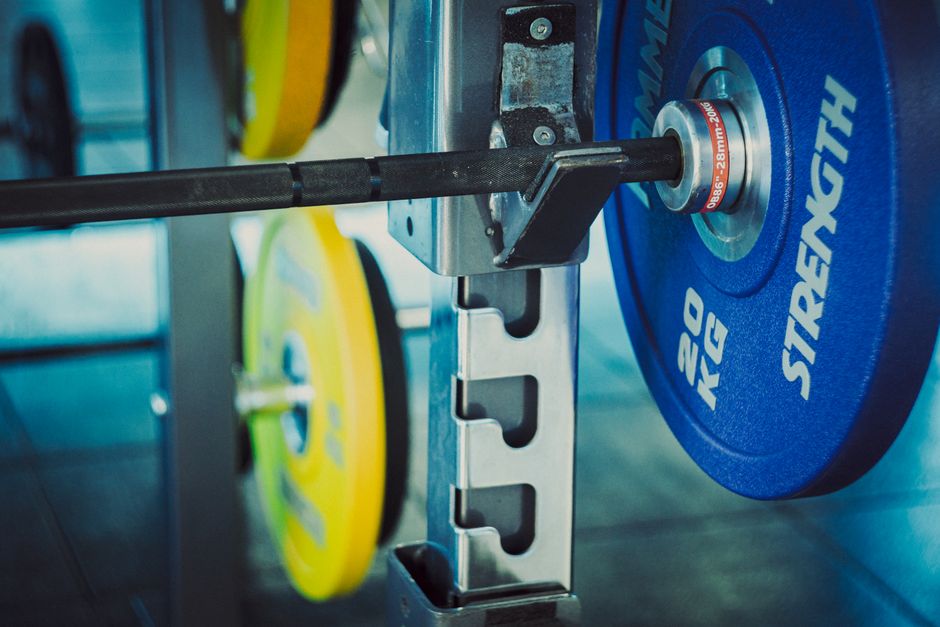
Photo: Matthew Jesús / Pexels
"Power rack" and "power tower" sound like siblings, but they solve very different problems. A power rack is a four-post steel cage built to catch a loaded barbell when a squat or bench press goes wrong. A power tower is a bodyweight station — pull-up bar, dip handles, vertical knee raise, usually a push-up base — designed for people who never plan to load 315lb on their back. Buying the wrong one is the single most common home-gym mistake we see, and it usually costs about $400 to fix.
This comparison is deliberately cross-brand. We looked at FED Fitness alongside three names that dominate the category from very different price tiers: Rogue Fitness (the American premium benchmark), REP Fitness (the value-engineering favourite), Titan Fitness (the budget-import price leader), and Sportsroyals, which effectively owns the sub-$200 power tower shelf on Amazon.
When evaluating Power Rack vs Power Tower: Which Strength Equipment Should You Buy in 2026?, the key factors to consider are build quality, long-term durability, and whether it genuinely solves the problem it claims to address.
Nobody here wins by default. The right answer depends on whether you're barbell training, how much ceiling height and floor space you have, whether you're bolting to a concrete slab or a suspended timber floor, and how much you're willing to pay for 11-gauge steel you may never actually stress.
Average order value: $300+
Shop FED Fitness — See PricesFED Fitness sits in the mid-market: broader than a specialist rack brand, more serious than a big-box sports retailer. The advantage is that you can spec an entire room from one checkout — power rack, flat/incline bench, Olympic barbell, bumper or cast-iron plates, adjustable dumbbells and a cardio piece — without paying four separate shipping bills or discovering your bench doesn't clear the rack uprights. Their power racks typically use 2"x2" 12-gauge or 14-gauge tubing with 1" hole spacing through the bench-press zone, J-cups with UHMW liners, and a multi-grip pull-up bar as standard rather than a paid add-on. On the power tower side, FED offers a heavier-gauge tower with a wider base than the typical Amazon unit, which is the single biggest predictor of whether a tower wobbles during kipping pull-ups. Where FED genuinely beats Rogue and REP is total-package cost and delivery scope — you're often $300–$600 cheaper for rack, bench and barbell as a bundle. Where it lags is attachment ecosystem: you won't find the depth of lever arms, plate-loaded pulleys, and third-party compatible accessories that surround Rogue's Monster Lite standard.
Rogue's RML-390F flat-foot rack and the R-3 remain the reference points for home racks. You're getting 3"x3" 11-gauge steel, 5/8" fastener hardware, Westside hole spacing, and a laser-cut finish quality that genuinely looks different in person. The Monster Lite (2"x3") and Monster (3"x3") ecosystems mean you can bolt on Matador dip stations, safety straps, plate-loaded jammer arms and monolift attachments for the next decade. The catch is money and freight: a comparable Rogue rack usually lands 60–120% above a FED Fitness equivalent once shipping is added, and Rogue does not make a power tower at all — that's simply not their market. If you're a 400lb squatter, a lifelong lifter, or you want resale value that holds absurdly well on secondhand markets, Rogue is still the honest recommendation.
REP has spent the last few years eating into Rogue's territory from below. The PR-4000 series gives you 3"x3" 11-gauge steel with 5/8" hardware — essentially Rogue's spec sheet — at a meaningfully lower price, plus colour options Rogue charges extra for. The entry-level PR-1100 (2"x2", 14-gauge) competes much more directly with FED Fitness on price and is a fair fight: REP has the stronger attachment roadmap and a well-regarded warranty, while FED usually wins on bundle pricing and on shipping outside the US. REP also doesn't really do power towers, so if bodyweight-only training is your plan, they're not on your shortlist.
Titan's T-3 series is the price floor for a real 11-gauge rack, frequently undercutting REP by a few hundred dollars. The steel is genuinely thick. What you trade is finish consistency (chipped powder coat and slightly out-of-round holes are common complaints), customer service that's improved but still divides opinion, and hardware that people often upgrade. Against FED Fitness, Titan wins on raw specification-per-dollar for a bare rack; FED wins if you want a coherent set of bench, bar and plates that arrive matched and ready, and if you'd rather not spend an evening reaming bolt holes.
If you've decided a tower is what you actually need, the honest benchmark is Sportsroyals — their multi-function power towers sit around the $150–$220 mark, support roughly 400–500lb depending on model, and include dip bars, a pull-up bar, VKR pads and sometimes a folding bench. They are fine for the price. Where FED Fitness's tower justifies the premium is base width, upright gauge and pad quality — the wobble that shows up on cheap towers under a 200lb+ user doing dips is a real, measurable difference. If you're under 180lb and doing controlled reps, Sportsroyals is enough. If you're heavier, use momentum, or plan to add a weight belt, spend up.
Buy a power rack if you own or want a barbell, train alone, or ever intend to squat and bench heavy — the safeties are the entire point, and no tower replaces them. Buy a power tower if your ceiling is under about 7'6", your floor is suspended timber, your budget is under $250, or your training is genuinely bodyweight-led. Note that most good racks include a pull-up bar and accept a dip attachment, so a rack can absorb a tower's job — but never the reverse.
There isn't one winner. If you're a serious barbell lifter with a concrete floor and a budget above roughly $900, buy Rogue or REP — the 3"x3" 11-gauge platform and attachment ecosystem will outlast three cheaper racks, and Rogue's resale value softens the sting. If you want maximum steel per dollar and don't mind imperfect finish or DIY fixes, Titan's T-3 is unbeatable on price. If your training is bodyweight-only and you're a lighter lifter, a Sportsroyals tower at under $220 does the job without pretending otherwise. FED Fitness wins the middle ground: the person kitting out a garage or spare room from scratch who wants a rack, a bench, a barbell, plates and possibly a cardio machine to arrive together, work together, and cost less than piecing it out — and who is training in the 135–315lb range rather than chasing a 500lb squat. Choose the format first (rack for barbell, tower for bodyweight), then choose the brand that matches your actual load, not your aspirational one. Browse the current FED Fitness racks, towers and bundles here.
Average order value: $300+
Shop FED Fitness — See PricesNo. A power tower has no safety arms, so it can't catch a failed squat or bench press, and it doesn't accept a barbell. It's excellent for pull-ups, dips, knee raises and push-ups. A power rack, by contrast, can do everything a tower does (most include a pull-up bar and accept a dip attachment) plus barbell work — so if you have the ceiling height, budget and floor, the rack is the more complete purchase.
It depends on your loads. Rogue's RML-390F, REP's PR-4000 and Titan's T-3 use 11-gauge 3"x3" tubing rated well beyond 1,000lb — genuinely relevant if you're squatting 400lb+ or dropping the bar onto safeties regularly. FED Fitness and REP's PR-1100 use lighter 12/14-gauge 2"x2" tubing, which is entirely adequate for the vast majority of home lifters working in the 135–315lb range. Pay for 11-gauge if you're strong now, not if you hope to be.
Most full-height power racks stand around 90–93 inches, so you want a minimum of about 8 feet to use the pull-up bar comfortably. Shorter 80-inch racks and flat-foot models exist for basements. Power towers are typically 84–92 inches tall depending on the height setting, and many are adjustable — which is exactly why they're the better choice in a low-ceilinged basement or a room with exposed joists.
Found this helpful? Share it!
Our team evaluates home gym gear, training tools, and workout accessories so you don't have to. Every recommendation is based on real research: customer reviews, expert opinions, and value for money. Learn more about us →
This post contains affiliate links. We may earn a commission if you purchase through our links at no extra cost to you.
← Back to Best Fitness Picks Daily| Retailer | Price Range | Shipping | Link |
|---|---|---|---|
| Amazon | Check Current Price | Free (Prime) | View on Amazon → |
| Walmart | Check Site | Free over $35 | Search → |
| Target | Check Site | Free over $35 | Search → |
Prices may vary. Click through to each retailer for current pricing.