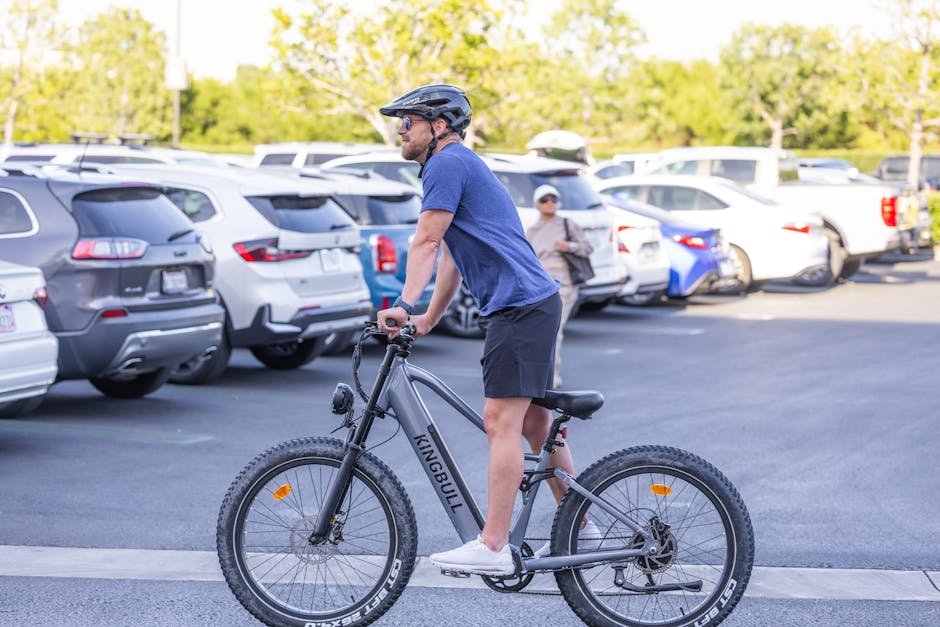
Photo: KINGBULL Bike / Pexels
Fall is quietly the best e-bike buying season. Prices soften after the summer rush, brands clear inventory before the holidays, and the riding conditions — cool mornings, dry leaves, low sun — reward a bike that actually matches your terrain. That's the real question here: do you want a Kingbull commuter build with a rack, fenders and lights, or a Kingbull mountain-style fat tire model that shrugs off gravel and mud?
But choosing between two Kingbull configurations without looking outside the brand is how people end up with buyer's remorse. Kingbull competes in a crowded value segment against Rad Power Bikes, Aventon and Lectric eBikes — three companies with deeper service networks, longer track records and, in some cases, better components at similar price points. Any honest comparison has to put those on the table.
When evaluating Kingbull Commuter E, the key factors to consider are build quality, long-term durability, and whether it genuinely solves the problem it claims to address.
Below we break down what Kingbull's commuter and mountain platforms actually do well, where Rad, Aventon and Lectric beat them, and which bike makes sense for which rider heading into fall 2026. Some links are affiliate links, but the assessments are our own.
Average order value: $800+
Shop Kingbull Bike — See PricesKingbull's lineup splits fairly cleanly. The commuter-leaning models (think the Literider-style step-through and city builds) typically pair a 750W rear hub motor with a 48V battery in the 15–20Ah range, 20" x 4" or 26" x 3" tires, integrated lights, fenders and a rear rack — and they usually land between roughly $999 and $1,499 on sale. The mountain/fat tire side (Explorer and Peak-class bikes) pushes toward 1,000W peak output, front suspension forks with 80–100mm travel, hydraulic disc brakes on higher trims, and knobbier 26" x 4" rubber. Those generally run about $1,299–$1,899.
The practical difference: the commuter is 8–15 lbs lighter, rolls faster on pavement, and comes ready to carry groceries. The mountain build gives you suspension, better braking modulation, and traction on wet leaves and loose gravel — at the cost of rolling resistance, range (expect 10–20% less on the same battery) and weight that makes stair-carrying miserable. If more than 80% of your riding is paved, the commuter is the smarter Kingbull. If you have gravel connectors, dirt paths, or genuinely bad winter roads, take the fat tire.
Where Kingbull as a brand stands out is spec-per-dollar: you frequently get a torque sensor option, hydraulic brakes and a 20Ah battery at a price where competitors are still shipping cadence sensors and 14Ah packs. Where it lags is dealer support and parts availability, which we'll get to.
Rad Power is the closest direct analog — the RadCity 5 Plus (around $1,799) is the commuter, the RadRover 6 Plus (around $1,999) is the fat tire. Rad's motors are more conservative on paper (750W nominal, Class 2 with a 20 mph cap out of the box, or 28 mph on some Class 3 models), and you'll pay $300–$600 more than an equivalent Kingbull for similar-looking specs. What you're buying is infrastructure: UL 2849 certification across the line, a semi-integrated battery with a proven cell supplier, mobile service partners in many US metros, and a parts catalog that actually stocks the fender, controller or display you need three years from now. For a daily commuter who cannot afford a week of downtime, that's worth real money. Rad's weakness is performance value — the RadRover's mechanical brakes on some trims and modest torque figures feel dated next to what Kingbull and Aventon ship at similar or lower prices.
Aventon is the ride-feel benchmark in this price band. The Level.3 commuter (roughly $1,799) and Aventure.3 fat tire (roughly $2,099) both use torque sensors as standard, hydraulic disc brakes, and Aventon's ACU connected system with GPS tracking, over-the-air updates and app-based ride tuning. The torque sensor matters more than any spec sheet number: it makes the bike feel like a bicycle rather than a scooter, which is exactly what you want on a stop-and-go commute. Aventon also has a genuine dealer network — you can buy and get service at local bike shops in most US states, which Kingbull cannot match. The trade-off is price. You're paying $400–$700 more than a comparably specced Kingbull, and Aventon batteries tend to be 14–15Ah rather than 20Ah, so raw range is often lower even if the efficiency is better.
If budget is the deciding factor, Lectric is hard to argue with. The XP 4 series starts near $999 and frequently ships with a rear rack, fenders and lights included — accessories that cost $150+ elsewhere. Lectric's folding fat tire format is genuinely useful for apartment dwellers, RV owners and anyone with a small trunk, and the company's customer service reputation is among the best in direct-to-consumer e-bikes. Where Lectric loses to Kingbull's mountain platform is real off-road capability: the 20" wheels, short-travel forks and lower-end drivetrains aren't built for sustained trail riding. And where it loses to Aventon is refinement — cadence sensing on base models, and a ride that feels utilitarian rather than polished. Lectric is the answer for cheap, portable, mostly-paved riding; it is not the answer for singletrack.
Strip away marketing and four things separate these bikes: sensor type (torque beats cadence for feel), brake type (hydraulic beats mechanical, especially on a 70 lb fat tire bike), battery capacity and cell quality, and safety certification. Kingbull tends to win on capacity and price. Aventon wins on sensor and ride refinement. Rad wins on certification and serviceability. Lectric wins on entry price and portability. Before you buy anything in 2026, confirm the specific model you're ordering carries UL 2849 or UL 2271 certification — several US cities and many apartment buildings now require it, and it's the single biggest safety differentiator in this category.
There's no single winner here, only a right answer per rider. If you commute daily on pavement and downtime would genuinely disrupt your life, buy the Rad Power RadCity 5 Plus — you're paying a support premium and it's worth it. If ride quality and app features matter most and your budget stretches past $1,700, the Aventon Level.3 is the best-feeling bike in this comparison thanks to its torque sensor and dealer-backed service. If you're on a tight budget or need a bike that folds into a trunk, the Lectric XP 4 is unbeatable value. Kingbull wins for the rider who wants the most hardware for the money and is comfortable turning a wrench: a Kingbull commuter is the pick for long paved rides where that bigger battery pays off, and a Kingbull fat tire mountain model is the pick if your route includes gravel, dirt or genuine winter road slop — it's simply more capable off-pavement than anything Lectric sells at a similar price. Choose the commuter if 80% or more of your miles are paved; choose the mountain build if they aren't.
Average order value: $800+
Shop Kingbull Bike — See PricesUsually not, if your commute is paved. Fat tires cost roughly 10–20% of your range through rolling resistance and add 8–15 lbs. Buy a fat tire model only if you regularly ride gravel, sand, snow or badly broken pavement — in those conditions the traction and comfort are worth every lost mile.
Kingbull commuters typically run about $999–$1,499 and mountain models about $1,299–$1,899. Comparable Rad Power bikes sit near $1,799–$1,999 and Aventon near $1,799–$2,099. Lectric undercuts everyone starting around $999. Kingbull's advantage is spec-per-dollar; Rad and Aventon's advantage is service.
Yes. UL 2849 (full system) and UL 2271 (battery) certification are now required by several US cities and many apartment buildings, and insurers increasingly ask about it. Rad Power certifies its full lineup; check the specific Kingbull, Aventon or Lectric model listing before ordering rather than assuming brand-wide coverage.
Found this helpful? Share it!
Our team evaluates home gym gear, training tools, and workout accessories so you don't have to. Every recommendation is based on real research: customer reviews, expert opinions, and value for money. Learn more about us →
This post contains affiliate links. We may earn a commission if you purchase through our links at no extra cost to you.
← Back to Best Fitness Picks Daily| Retailer | Price Range | Shipping | Link |
|---|---|---|---|
| Amazon | Check Current Price | Free (Prime) | View on Amazon → |
| Walmart | Check Site | Free over $35 | Search → |
| Target | Check Site | Free over $35 | Search → |
Prices may vary. Click through to each retailer for current pricing.