By Best Fitness Picks Daily • July 24, 2026 • Contains affiliate links
Affiliate Disclosure: As an Amazon Associate, we earn from qualifying purchases. Clicking our links costs you nothing extra and helps us keep reviewing products for free.
Building a home gym has become increasingly popular, but the question of where to set it up—indoors or outdoors—significantly affects your equipment choices, maintenance burden, and long-term satisfaction. Both approaches offer distinct advantages and trade-offs that deserve careful consideration before you invest $300 or more in strength equipment.
Before committing to a home gym setup, assess your available space realistically—measure your room dimensions and account for equipment footprint plus safe movement clearance, as many buyers overestimate how much gear will actually fit comfortably in their homes. If you live in a climate with reliable warm weather and enjoy variety, starting with affordable resistance bands and a yoga mat for outdoor use allows you to test your commitment to exercise before investing in expensive stationary equipment that may become unused clutter.
This guide compares indoor home gyms with outdoor summer workout stations, examining real-world factors like weather resistance, space requirements, equipment durability, and the specific gear that works best in each environment. We'll help you decide which setup aligns with your fitness goals, climate, and lifestyle.
Indoor Home Gym (Garage, Basement, Spare Room)
An indoor home gym uses your existing shelter—garage, basement, or spare room—to house strength equipment year-round. This setup typically includes dumbbells (both fixed and adjustable options), weight plates, benches, and barbells organized in a climate-controlled or at least weather-protected space. Indoor gyms work with standard cast iron plates and traditional equipment without special rust-resistant modifications.
Space efficiency is a major advantage: even a 10x15 foot area accommodates a functional strength setup with dumbbells, a bench, and a barbell. Equipment maintenance is minimal since moisture and UV exposure are eliminated, and noise from dropped weights matters less in enclosed spaces away from neighbors.
Best for: Year-round consistent training, those in cold/wet climates, lifters who prioritize convenience and minimal maintenance, anyone training early morning or late evening.
Outdoor Summer Workout Station (Backyard, Patio, Deck)
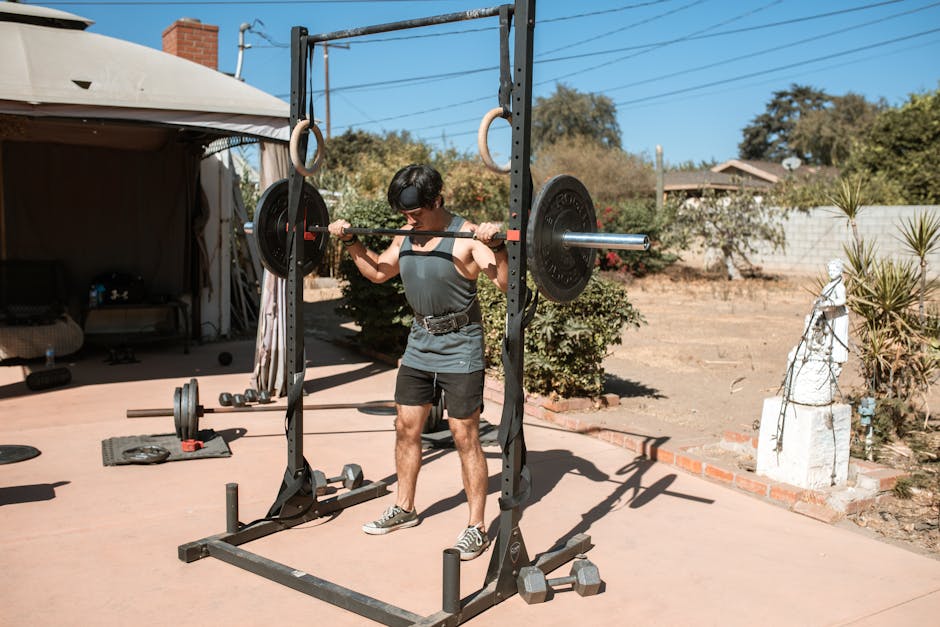
An outdoor summer gym relocates your training to fresh air and natural sunlight, typically set up on a concrete pad, compacted gravel, or weather-resistant decking. This approach requires weather-resistant equipment specifically rated for outdoor use, including rubber-coated or bumper plates (which reduce noise and protect flooring), stainless-steel barbells, and galvanized or powder-coated racks to resist corrosion.
The outdoor setup eliminates excuses rooted in "gym inconvenience" and provides natural motivation through sunlight exposure. However, it demands active maintenance: regular cleaning, rust prevention, and weather monitoring. Equipment must be durable enough to withstand rain, UV exposure, and temperature fluctuations.
Best for: Summer-focused training, those in warm/dry climates, lifters seeking motivational variety and outdoor workouts, people with yard space and willingness to maintain exposed equipment.
A hybrid approach keeps essential equipment indoors (dumbbells, adjustable benches, barbells) while adding weather-resistant pieces outdoors during summer months. This lets you expand your training variety seasonally without maintaining a complete duplicate set of equipment or exposing your primary tools to year-round weather stress.
This option provides flexibility: train indoors during winter and poor weather, then move or add equipment outside when conditions improve. It requires careful equipment selection—your core dumbbells and plates must be portable or duplicated, and some pieces (like adjustable benches) can shuttle between locations while heavy racks stay fixed.
Best for: Lifters in variable climates, those wanting seasonal training variety, people who can dedicate space both indoors and outdoors, budget-conscious buyers who want to expand gradually.
Cardio + Strength Combo (Indoor Priority with Outdoor Options)
This setup prioritizes indoor cardio machines (treadmills, exercise bikes) alongside strength equipment, with the option to move adjustable dumbbells, weight benches, and portable barbells outside during summer. Cardio machines are generally unsuitable for outdoor use due to electronic components and weather sensitivity, making indoor placement essential for this approach.
The strategy acknowledges that cardio equipment doesn't travel well, so you commit to an indoor cardio zone and treat strength equipment as the flexible component. This works well for people who want complete fitness variety—both strength and cardiovascular training—without building two completely separate gyms.
Best for: Lifters seeking balanced strength and cardio work, those with dedicated indoor space for machines, people who want cardio year-round and strength training seasonally.
Pros & Cons
Pros
✓ Indoor gyms require zero weather maintenance and protect equipment from rust, corrosion, and UV fading—standard cast iron plates and traditional racks last indefinitely indoors.
✓ Outdoor setups provide natural motivation, fresh air, and sunlight exposure, which research associates with improved mood and consistency.
✓ Indoor gyms offer year-round training without seasonal interruption or weather-dependent decisions.
✓ Hybrid and outdoor setups eliminate the monotony of indoor training, offering seasonal variety that keeps motivation high.
✓ Outdoor spaces feel less cramped than basements or garages, even with the same equipment footprint—psychological space matters for workout enjoyment.
Cons
✗ Indoor gyms in basements or garages feel isolating and lack natural light; motivation can lag during winter months.
✗ Outdoor equipment requires active maintenance: rust-prevention treatments, regular cleaning, weather monitoring, and storage during storms or extreme seasons.
✗ Weather-resistant equipment (bumper plates, stainless-steel barbells, galvanized racks) costs 20–40% more than standard indoor alternatives.
✗ Hybrid setups require either equipment duplication or frequent moving, both of which add cost and logistical complexity.
✗ Outdoor training is unavailable in winter, heavy rain, or extreme heat unless you have protective shelter like a tent or awning.
Our Verdict
The best choice depends on your climate, motivation style, and maintenance tolerance. Choose an indoor home gym if you live in a cold or wet climate, prioritize year-round consistency, want minimal equipment maintenance, or lack dedicated outdoor space. Standard FED Fitness dumbbells, cast iron plates, and benches are affordable and require no special rust treatment indoors. Choose an outdoor summer station if you live in a warm, dry climate, train primarily May–September, and find fresh air essential to your motivation. Invest in weather-resistant equipment: bumper plates, stainless-steel or powder-coated barbells, and galvanized racks—the 20–40% premium protects your investment and reduces maintenance burden. Choose a hybrid setup if you have both indoor and outdoor space and want seasonal variety without equipment duplication. Keep your core adjustable dumbbells and benches mobile, maintain a fixed strength station indoors, and add weather-resistant pieces outside when weather permits. Avoid attempting a full outdoor setup in wet climates unless you're willing to cover equipment and perform monthly maintenance; the frustration and rust damage typically outweigh the motivational benefit.
Frequently Asked Questions
How much space do I need for a home gym versus an outdoor station?
Both require roughly 10x15 feet for a functional strength setup with dumbbells, a bench, and a barbell. Indoor gyms feel more cramped due to walls and existing fixtures; outdoor stations feel larger even with identical equipment because of open air and light. Outdoor spaces need stable, level ground (concrete or compacted gravel) to prevent equipment movement and water pooling.
What's the difference between cast iron plates and bumper plates?
Cast iron plates are cheaper ($0.50–$1.00 per pound) but rust quickly if exposed to moisture—ideal for indoor gyms only. Bumper plates are rubber-coated ($1.50–$2.50 per pound), resist rust and corrosion, reduce noise, and protect flooring. For outdoor gyms, bumper plates are nearly essential unless you're willing to apply rust-prevention treatments monthly.
Can I use standard FED Fitness equipment outdoors?
Standard dumbbells and cast iron plates will rust within weeks of outdoor exposure. Adjustable benches and barbells may warp or crack under UV stress. For outdoor use, verify equipment is rated weather-resistant or upgrade to stainless-steel, powder-coated, or galvanized versions. Check FED Fitness product specifications before purchasing for outdoor placement.
Is a power rack necessary for a home gym?
No, but it increases training variety and safety. For beginners, dumbbells and a bench suffice. As you progress, a power rack enables barbell exercises (squats, bench press, deadlifts) with built-in safety features. Outdoor power racks must be galvanized or powder-coated; they're heavier to move and more expensive but offer unmatched durability in weather.
How do I maintain outdoor FED Fitness equipment through summer?
Clean equipment monthly with a dry cloth to remove pollen and moisture. Apply a light coat of WD-40 or silicone spray to metal parts monthly. After rain, dry plates and barbells immediately. Cover equipment or move it indoors during extended rain or storms. Store equipment in a shed or covered area during winter if you live in freezing climates to prevent ice damage.
What surface is best for outdoor gym equipment?
Concrete is ideal—stable, level, and requires no maintenance. Compacted gravel drains well but may shift over time. Avoid grass or dirt (unstable, muddy, promotes rust from moisture). If using a deck, verify it can support concentrated weight; spread equipment across load-bearing joists and consider rubber mats under heavy plates to prevent splintering.
Should beginners buy fixed or adjustable dumbbells?
Adjustable dumbbells save 60–70% space and 30–40% cost compared to fixed sets, making them better for home gyms. Fixed dumbbells offer faster transitions between weights during workouts. For beginners, start with adjustables to explore different exercises; upgrade to fixed sets later if you're training seriously and have the space.
Our team evaluates home gym gear, training tools, and workout accessories so you don't have to. Every recommendation is based on real research: customer reviews, expert opinions, and value for money. Learn more about us →
This post contains affiliate links. We may earn a commission if you purchase through our links at no extra cost to you.