By Best Fitness Picks Daily • July 24, 2026 • Contains affiliate links
Affiliate Disclosure: As an Amazon Associate, we earn from qualifying purchases. Clicking our links costs you nothing extra and helps us keep reviewing products for free.
Summer is prime time to invest in home gym equipment that lasts. But with overlapping product categories—Olympic barbells, adjustable dumbbells, weight plates, power racks, benches, and power towers—it's easy to confuse which pieces actually belong in your space and which are redundant.
Before investing in a power rack, measure your ceiling height and floor space carefully, as most quality racks require at least 7-8 feet of clearance and take up significant square footage that can't be easily moved. Verify that your flooring can support the combined weight of the rack, barbell, and plates you plan to load, and consider whether you need to reinforce or add protective flooring underneath to prevent damage and reduce noise.
This guide cuts through the noise by comparing the core equipment categories you'll encounter when building or upgrading a home gym. We've grounded each comparison in real product features, durability claims, and use cases so you can make an informed decision based on your training style, space, and budget—not marketing hype.
Olympic barbells are the backbone of serious strength training. Quality options feature smooth, consistent knurling for secure grip during heavy compound lifts, precision-manufactured to meet strict standards for accuracy and durability. Competition-grade weight plates come in standardized denominations with various finishes, designed for long-term use without warping or chipping.
This category is non-negotiable if you plan to perform squats, bench presses, and deadlifts with progressively heavier loads. The investment is substantial ($300+ for a complete barbell and plate set), but a quality barbell outlasts most other gym equipment.
Best for: Lifters committed to compound strength training (squats, deadlifts, bench press); anyone planning to progress with heavy weights over years
Adjustable & Fixed-Weight Dumbbells
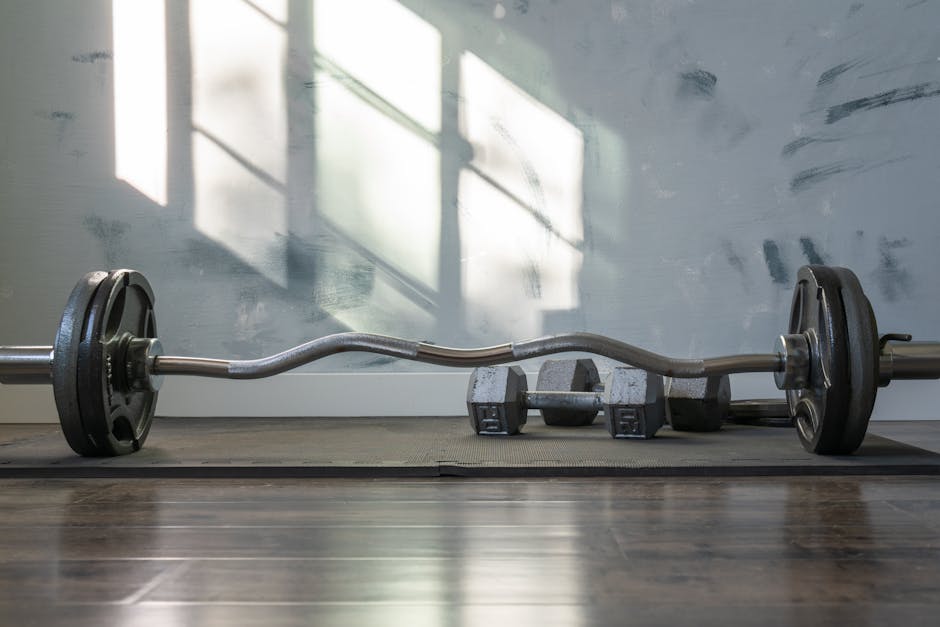
Dumbbells offer versatility in a compact footprint. Adjustable dumbbells save space by replacing 10+ individual pairs, while fixed-weight sets eliminate the time spent changing plates mid-workout. Modern options feature ergonomic grips to prevent slipping during high-intensity work, and are precision-manufactured for accurate weight distribution across different denominations.
Dumbbells bridge the gap between full barbells and cardio equipment—they're essential for isolation exercises, accessory work, and unilateral movements that barbells can't replicate.
Best for: Those with space constraints; lifters who want isolation exercises alongside compound moves; beginners building their first gym
Power Racks & Power Towers
Power racks provide a safe training environment with adjustable safety bars and sturdy construction, enabling you to fail safely on heavy squats and bench presses. Power towers (smaller, space-efficient alternatives) focus on bodyweight and assisted movements like pull-ups, dips, and leg raises, typically without the barbell compatibility of full racks.
A power rack is a serious piece of equipment—they're expensive ($400–800+), require floor space, and are semi-permanent installations. Power towers are more affordable and portable but cannot accommodate a barbell for compound lifts.
Best for: Power racks: lifters doing heavy barbell work who want maximum safety; Power towers: apartment dwellers and those doing primarily bodyweight/assisted exercises
Weight Benches
Weight benches enable pressing movements (dumbbell and barbell bench press, incline work) and serve as a stable base for seated exercises. Quality options feature stable construction with adjustable back positions (flat, incline, decline) to hit different muscle angles and accommodate various exercises beyond pressing.
A bench is most useful when paired with dumbbells or a barbell and power rack. Standalone, its utility is limited—it's an accessory piece, not a foundation piece like barbells or power racks.
Best for: Lifters who want to perform pressing movements safely; anyone combining barbells/dumbbells with upper-body focus
Cardio Machines (Treadmills, Rowers, Bikes)
Cardio equipment complements strength training by providing conditioning and recovery work. Modern cardio machines are space-intensive and expensive relative to their single-purpose utility. They work best as supplementary tools rather than core equipment in a budget-conscious home gym.
Cardio machines require dedicated floor space and don't build strength—they're additions to a strength-focused home gym, not foundations.
Best for: Those with space and budget for conditioning work alongside strength training; athletes integrating multiple training modalities
Pros & Cons
Pros
✓ Olympic barbells and competition plates are standardized, durable, and universally compatible across different manufacturers
✓ Adjustable dumbbells save significant space compared to fixed-weight sets while maintaining exercise variety
✓ Power racks enable safe, progressive heavy lifting by providing adjustable safety bars and fail points
✓ Quality equipment from reputable manufacturers includes long-term durability, often outlasting years of frequent use
Cons
✗ Barbells, plates, power racks, and benches require substantial upfront investment ($300–$800+) and dedicated floor space
✗ Power towers cannot accommodate barbell work, limiting their utility for serious strength athletes
✗ Cardio machines are expensive and space-intensive relative to their single-purpose function in a hybrid gym
Our Verdict
The best home gym gift depends entirely on the recipient's training style and space constraints. For serious strength athletes (squats, deadlifts, bench press), prioritize an Olympic barbell and competition-grade weight plates first—these are non-negotiable. Add a power rack if budget allows, then dumbbells and a bench for accessory work. For space-constrained lifters, adjustable dumbbells plus a power tower covers most bases without requiring a permanent installation. For hybrid training (strength + conditioning), a barbell and plates + power rack + cardio machine creates a comprehensive facility, but this requires serious budget ($800+) and dedicated space. The key insight: barbells and plates are the foundation; everything else is accessory. Start there, then build based on your specific goals rather than treating all categories as equally important.
Frequently Asked Questions
What's the difference between Olympic barbells and standard barbells?
Olympic barbells are standardized at 45 lbs (20 kg) and use 2-inch diameter sleeves to accommodate standard plates. They're designed for progressive heavy lifting and meet strict manufacturing tolerances. Standard/EZ-curl bars are lighter and cheaper but less versatile for serious compound work.
Are competition-grade weight plates necessary for home gyms?
Not strictly necessary, but they're worth the investment if you're lifting heavy loads progressively. Calibrated plates ensure accurate weight distribution (critical for form assessment), and premium finishes resist rust and chipping in home environments. Budget plates work fine for casual training.
Should I buy adjustable or fixed-weight dumbbells?
Adjustable dumbbells save space (crucial in apartments). Fixed-weight sets are faster to use mid-workout and more durable long-term. Choose adjustable if space is limited; choose fixed if you have room and plan frequent, heavy dumbbell work.
Do I need both a power rack and a weight bench?
A power rack alone handles squats, deadlifts, and pin presses safely. Add a bench to enable barbell bench press, dumbbell pressing, and isolation work. If budget is tight, the power rack is more essential—you can perform most movements without a bench but not without a rack for compound lifts.
Can a power tower replace a power rack?
No. Power towers excel at bodyweight and assisted movements (pull-ups, dips, leg raises) but cannot accommodate a barbell. A power rack is required if you want to perform barbell squats, deadlifts, and presses safely.
Our team evaluates home gym gear, training tools, and workout accessories so you don't have to. Every recommendation is based on real research: customer reviews, expert opinions, and value for money. Learn more about us →
This post contains affiliate links. We may earn a commission if you purchase through our links at no extra cost to you.