By Best Fitness Picks Daily • July 21, 2026 • Contains affiliate links
Affiliate Disclosure: As an Amazon Associate, we earn from qualifying purchases. Clicking our links costs you nothing extra and helps us keep reviewing products for free.
Choosing dumbbells for a home gym isn't a one-size-fits-all decision. Your ideal pair depends on your space, noise constraints, experience level, and budget. This guide compares the main dumbbell types beginners and apartment dwellers actually consider: rubber-coated, hexagonal, and competition-grade options.
Before purchasing dumbbells for a home gym, measure your available storage space and floor durability to determine whether rubber-coated dumbbells (best for protecting floors), hex dumbbells (most space-efficient for racks), or competition plates (most durable but require dedicated storage) will work best for your setup. Consider your primary exercises too—rubber and hex versions are ideal for dynamic movements and dropping, while competition dumbbells excel for precise strength training where stability matters most.
Rather than recommending a single "best" product, we'll break down the real trade-offs of each style so you can match your priorities to the right equipment. Whether you're worried about floor damage, noise complaints, or fitting dumbbells into a cramped corner, the right choice becomes clear once you understand what each type actually delivers.
Rubber-Coated Dumbbells
Rubber-coated dumbbells feature a thick rubber sleeve over an iron or steel core. The coating absorbs impact, deadens sound, and protects flooring from scuffs and dents. They're heavier and more durable than vinyl alternatives, making them a standard choice for serious home gym setups. Quality matters significantly here—cheap rubber cracks and peels within months, while properly manufactured rubber coating can last years of consistent use.
These work equally well for beginners and experienced lifters. The grip is typically textured and non-slip, even when hands sweat, which matters especially for compound movements where form is critical. Weight increments usually run 5–10 pounds, giving you fine-tuned progression options.
Best for: Beginners building a durable home gym and anyone prioritizing floor protection
Hex (Hexagonal) Dumbbells
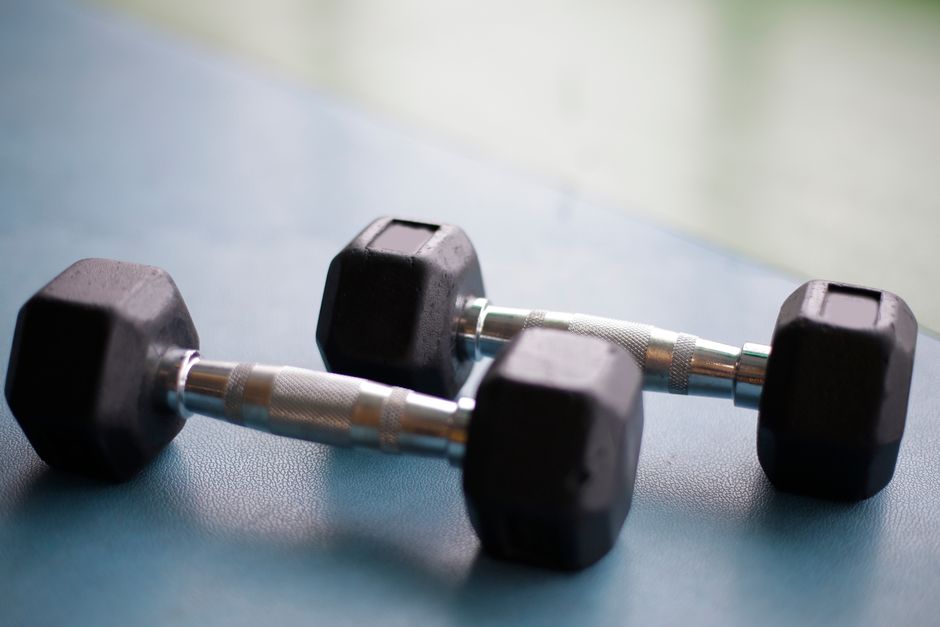
Hex dumbbells have a six-sided design that prevents rolling and takes up less space than round dumbbells when stored or placed on the ground. Many come with rubber coatings as well, combining the space-saving design with floor and noise protection. The flat edge-to-edge footprint is the key advantage—they stack efficiently in corners and don't shift during workouts.
This design is particularly useful in apartments or small rooms where floor space is limited. The compact profile also means less accidental noise when setting them down, since they're less likely to roll or tumble. Weight ranges typically start light (5–10 lbs) and scale up in manageable increments, making progression straightforward for beginners.
Best for: People with limited space and those who value a stable, non-rolling design
Competition-Grade Dumbbells
Competition dumbbells are built to IWF (International Weightlifting Federation) or IPF (International Powerlifting Federation) standards, featuring precision-engineered construction with tightly fitted sleeves and secure collars. They're designed to handle intense workouts and are exceptionally quiet—the heavy-duty urethane or rubber coating absorbs impact far better than standard equipment. Sleeves fit so precisely that there's virtually no rattle during exercises.
These are overkill for casual home gym use but shine if noise is your top concern or if you drop weights regularly. The trade-off: competition dumbbells typically cost significantly more and often come in heavier increments (like 25–100+ lbs), making them less ideal for beginners who haven't yet determined their starting weight. They're built for durability and performance, not progression simplicity.
Best for: Noise-sensitive environments (apartments, thin walls) and serious lifters willing to invest
Color-Coded Dumbbells
Color-coded dumbbells use a standardized color system (red for light, blue for medium, yellow for heavy, etc.) to instantly identify weight without reading the label. This matters more than it sounds for beginners—you avoid fumbling during sets, can mentally map progression, and feel more organized. Most color-coded options use rubber or vinyl coating and include multiple pairs in one set.
The aesthetic appeal also plays a real psychological role: a set of colorful dumbbells looks more like a "real gym" than mismatched black iron, which increases the chances you'll actually use them consistently. The color coding system also trains your brain to associate color with effort level, speeding up workout setup.
Best for: Visual learners and beginners who benefit from quick, color-based weight identification
Neoprene-Coated Dumbbells
Neoprene coating is thinner and lighter than rubber but still protective, offering a middle ground between bare iron and heavy rubber sleeves. Neoprene dumbbells are gentler on hands and floors than uncoated metal while being slightly more compact than full rubber-coated options. They're quieter than completely bare dumbbells but not as silent as heavy competition-grade equipment.
This option makes sense if you want some floor and noise protection without the bulk and weight of thick rubber. Grip is typically textured and adequate for general workouts. Weight ranges are usually beginner-friendly (5–30 lbs), though the coating can wear faster than premium rubber under heavy use.
Best for: People seeking a balance between protection, weight, and cost
Pros & Cons
Pros
✓ Rubber and hex designs protect floors and reduce noise compared to bare metal or light coatings
✓ Color-coded options speed up exercise setup and make progression visually intuitive for beginners
✓ Competition-grade dumbbells are built so precisely they eliminate rattling and sliding during lifts
✓ Hexagonal designs prevent rolling and fit efficiently into corners and tight storage spaces
✓ Multiple coating options (rubber, neoprene, urethane) let you match protection level to your environment and budget
Cons
✗ Cheap rubber coatings crack, peel, or become slippery—quality varies dramatically across price ranges
✗ Competition dumbbells often jump in heavy increments (25+ lbs), making them poor choices for true beginners still finding their baseline strength
✗ Rubber-coated dumbbells weigh more than lighter alternatives, taking up more overall weight if space is extremely limited
✗ Color-coded sets are usually fixed packages—you may pay for weights you don't need
Our Verdict
The right choice depends on your specific constraint:
If noise is your primary concern: Competition-grade dumbbells with urethane sleeves are worth the premium cost—the precision engineering and dense coating are noticeably quieter than standard rubber. If competition prices are prohibitive, a quality rubber-coated hex dumbbell set is a solid second choice.
If space is limited: Hex dumbbells are your best bet. They stack efficiently, won't roll away, and reduce accidental noise simply by staying put. Adding a rubber coating gives you floor protection without doubling the footprint of round alternatives.
If you're a beginner starting from scratch: Color-coded rubber dumbbells offer the best learning experience—the visual system eliminates decision-making during workouts, the weight increments are small enough to find your starting point, and the tactile grip builds confidence with proper form. Standard rubber-coated dumbbells work equally well if you don't need the color system.
If budget is the primary factor: Neoprene-coated dumbbells deliver basic protection at a lower cost than premium rubber, though they won't last as long under constant use. They're adequate for casual beginners but not ideal for serious lifters.
The worst choice: buying bare metal or plastic-coated dumbbells for an apartment home gym. The noise and floor damage will create resentment toward the equipment itself, undermining your consistency. Invest in at least a basic rubber or neoprene coating—it's the difference between equipment you actually use and equipment that becomes expensive clutter.
Frequently Asked Questions
What weight should a beginner start with?
Start with 5–10 pound dumbbells. This range lets you focus on form without overwhelming your stabilizer muscles. As you build confidence and strength over 2–4 weeks, you'll progress to 10–15 pounds. Color-coded or light-increment sets make this progression natural rather than forcing large jumps.
Are rubber dumbbells actually quieter than bare metal?
Yes, noticeably so. Rubber absorbs impact and deadens the sound of metal-on-metal contact. For apartment living, moving from bare iron to rubber dumbbells typically reduces perceived noise by 30–50%. Competition-grade options are even quieter due to precision construction and dense urethane coatings.
Should I buy a complete dumbbell set or individual pairs?
For beginners, a complete set with multiple weight options (usually 5–30 lbs) makes sense—it's cheaper per pound, ensures matching pairs, and eliminates purchase decisions later. Once you know your progression pattern, buying individual pairs as needed is more cost-effective.
How much space do hex dumbbells actually save compared to round ones?
Hex dumbbells reduce footprint by roughly 20–30% compared to round dumbbells of the same weight, since the flat edges allow stacking and prevent rolling into corners or under furniture. In a 10x10 bedroom, this difference is marginal, but in a 5x5 corner, it becomes noticeable.
Is competition-grade worth it for a home gym beginner?
Not usually. Competition dumbbells cost 2–3x more and come in heavy increments that don't match beginner progression needs. They're built for durability and noise reduction in professional settings. Standard quality rubber-coated options deliver 80% of the benefits at 40% of the cost for typical home use.
Do cheaper rubber dumbbells really peel and crack?
Yes. Budget rubber coatings (under $0.50 per pound) often fail within 6–12 months of regular use, especially if exposed to humidity or dropped repeatedly. Mid-range dumbbells ($0.75–1.50 per pound) typically last 3–5 years. Quality matters here—the cheapest option often becomes a false economy.
Our team evaluates home gym gear, training tools, and workout accessories so you don't have to. Every recommendation is based on real research: customer reviews, expert opinions, and value for money. Learn more about us →
This post contains affiliate links. We may earn a commission if you purchase through our links at no extra cost to you.