Photo: Erik Mclean / Pexels
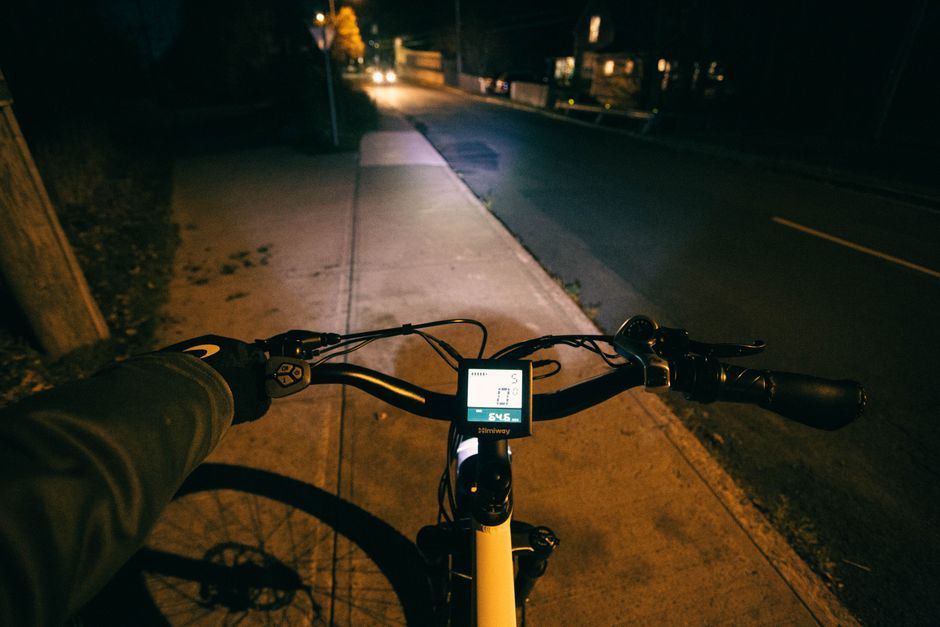
Fall is the season that quietly ends a lot of after-work rides. Sunset creeps earlier every week, leaf litter hides potholes, and low sun angles make drivers even worse at spotting cyclists than usual. A good USB rechargeable light set stops being a nice-to-have around late September — it becomes the piece of gear that decides whether you ride at 6 p.m. or park the bike until March.
ROCKBROS has become one of the most-searched budget lighting brands on Amazon and direct-to-consumer, with front lights typically running $20–$45 and combo sets often under $35. But budget lights get compared against a long-standing group of specialists: CatEye's AMPP series, NiteRider's Lumina line, and Lezyne's Macro Drive. Those brands charge two to four times as much, and it's fair to ask what that money actually buys.
When evaluating Best Bike Lights for Fall Night Rides in 2026: ROCKBROS USB Rechargeable Picks Compared, the key factors to consider are build quality, long-term durability, and whether it genuinely solves the problem it claims to address.
This comparison looks at four things that matter on an actual dark road: real usable beam pattern (not just claimed lumens), runtime honesty at the setting you'll really use, mount security on rough autumn pavement, and how the light holds up to rain and cold. We'll say plainly where ROCKBROS wins, and where it doesn't.
ROCKBROS' most popular front lights sit in the 400–1,000 claimed-lumen range, most commonly the compact bar-mounted models with integrated Li-ion cells and USB-C charging (older stock still ships micro-USB, so check the listing). What you get for roughly $20–$40 is genuinely useful: a bright center hotspot, three or four modes, a rubber strap or quick-release bracket, and IPX4–IPX6 water resistance depending on model. Several of the newer units add a side cutout for lateral visibility, which matters more at fall intersections than raw forward output. Where ROCKBROS is legitimately strong is the bundle: front-and-rear sets often cost less than a single CatEye AMPP 500 head unit, and the rear COB-style taillights are bright and easy to clip to a seatpost or bag loop. The honest caveats are that claimed lumens are optimistic (assume real-world output closer to 60–70% of the number on the box), runtimes are quoted on the lowest mode, and the beam is a round flood rather than a shaped, cutoff-style beam. That's fine on lit bike paths and suburban streets; it's less ideal on unlit rural roads where a shaped beam puts light down the road instead of into oncoming eyes. Browse ROCKBROS bike lights and cycling gear here.
CatEye has been making bike lights since the 1950s and the AMPP series is the reason many commuters never look elsewhere. The AMPP 500 runs around $50–$60, the AMPP 1100 around $90–$100. What you're paying for is consistency: CatEye's quoted runtimes are conservative rather than optimistic, the FlexTight bracket is the most secure tool-free mount in the industry (it clamps rather than stretches, so it doesn't creep on cobbles or leaf-slick chip seal), and the low-battery indicator actually warns you before the light drops out. The AMPP beam is a wide, even flood with reasonable near-field spill — better for seeing leaves and gravel directly in front of your wheel than the ROCKBROS hotspot. Downside: no side visibility ports on the 500, and you'll spend more on a CatEye front light alone than on a ROCKBROS front-and-rear kit.
If your fall route includes genuinely dark roads or fire-road gravel, NiteRider is the brand that changes the ride. The Lumina 1200 Boost sits around $100–$120 and the Lumina Max 2000 around $150–$170. These are US-designed, ANSI FL1-rated lights, which means the lumen and runtime numbers are measured to a published standard — a real difference from unrated budget lights. The Lumina throws a genuine long-distance beam with enough output to descend at speed, has a thermal management system that steps down output instead of cooking the LED, and NiteRider offers US-based service and replacement parts. The trade-offs are size and weight (these are chunky), a mount that's secure but bulkier than CatEye's, and price that's hard to justify if you're mostly riding lit streets at 12 mph.
Lezyne's Macro Drive 1400+ runs roughly $75–$90 and is the machined-aluminum answer in this group. The CNC body doubles as a heatsink, so sustained high-output runtime is better than plastic-bodied competitors, and it's USB-C with pass-through charging on current models — you can run it off a power bank on a long night ride, which neither ROCKBROS nor CatEye reliably supports. Lezyne's beam is a compromise: a shaped, wider-than-tall pattern that's better for road etiquette than a round flood. The knocks are the fiddly mode-memory behavior some riders dislike, a strap-style mount that's less rock-solid than CatEye's FlexTight, and a body that gets noticeably hot on boost mode.
Price for a front-and-rear setup: ROCKBROS roughly $25–$45; CatEye roughly $75–$110; Lezyne roughly $110–$140; NiteRider roughly $130–$200. Lumen honesty: NiteRider and Lezyne publish FL1/measured figures; CatEye is conservative; ROCKBROS is optimistic. Mount security: CatEye FlexTight > NiteRider > Lezyne strap > ROCKBROS strap. Value per dollar: ROCKBROS wins clearly. Long-term durability and service: CatEye and NiteRider win clearly.
There's no single winner here — there's a right answer per use case. If you're commuting on lit streets, riding bike paths, or you need to light up a second bike without spending real money, ROCKBROS is the sensible buy: you get a complete front-and-rear kit for the price of a lunch, and for being seen it's entirely adequate. If you commute daily and want a light you'll still be using in 2031, buy the CatEye AMPP 500 or 1100 — the mount and the honest runtime figures are worth the extra $30–$50. If any part of your fall route is genuinely unlit road or gravel, buy the NiteRider Lumina; nothing cheaper puts that much usable light down the road, and the FL1 rating means you can trust the numbers. Lezyne's Macro Drive 1400+ is the pick if you do long night rides and want power-bank pass-through charging in an aluminum body. Our honest suggestion for most fall riders: pair a mid-tier ROCKBROS taillight (or two — redundancy matters more than brightness on the back) with a CatEye or NiteRider headlight. That combination gets you dependable forward vision where it counts and cheap, replaceable rear visibility where you don't need to overpay.
Shop Rockbros →On lit city streets, 200–400 real lumens is plenty for being seen and spotting potholes at commuting speeds — that's where ROCKBROS fits well. On unlit roads or descents above 20 mph, you want 800–1,200 measured lumens, which realistically means a NiteRider Lumina, Lezyne Macro Drive or CatEye AMPP 1100. Remember that unrated budget lights typically deliver less than their box claims, so buy a step up from what you think you need.
Most ROCKBROS models are rated IPX4 to IPX6, which handles rain and road spray but is not submersion-proof. That's comparable to CatEye's IPX4 and Lezyne's IPX7 on some models. In practice the weak point on budget lights is the charging port cover — check that the rubber flap seats fully after every charge, and store the light indoors rather than leaving it bolted to a bike outside all winter.
A reflector only works when a driver's headlights are aimed at it, which fails on curves and at intersections. Use an active rear light, ideally two: one steady on the seatpost and one flashing on a bag or helmet. This is where ROCKBROS is genuinely competitive, since you can run redundant rear lights for the price of one premium unit — and redundancy protects you when a battery dies mid-ride.
Found this helpful? Share it!
Our team evaluates home gym gear, training tools, and workout accessories so you don't have to. Every recommendation is based on real research: customer reviews, expert opinions, and value for money. Learn more about us →
This post contains affiliate links. We may earn a commission if you purchase through our links at no extra cost to you.
← Back to Best Fitness Picks Daily| Retailer | Price Range | Shipping | Link |
|---|---|---|---|
| Amazon | Check Current Price | Free (Prime) | View on Amazon → |
| Walmart | Check Site | Free over $35 | Search → |
| Target | Check Site | Free over $35 | Search → |
Prices may vary. Click through to each retailer for current pricing.